
Introduction
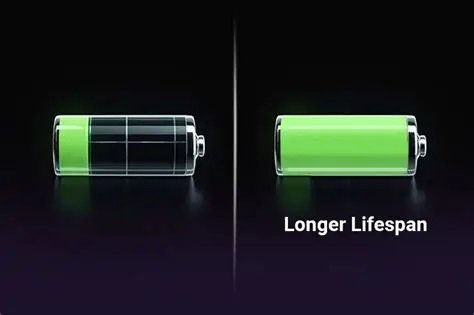
Depth of Discharge (DoD) has a stronger influence on LiFePO₄ battery lifespan than almost any other parameter. Optimizing DoD can significantly extend cycle life while maintaining system efficiency.
Primary SEO Keywords:
LiFePO₄ depth of discharge, DoD lithium battery, LiFePO₄ battery lifespan optimization
What Is Depth of Discharge?
DoD represents how much of the battery’s total capacity is used during each cycle:
- 100% DoD = fully discharged
- 80% DoD = 20% capacity remaining
- 50% DoD = half of capacity used
Lower DoD generally means longer battery life.
Relationship Between DoD and Cycle Life
Typical LiFePO₄ performance trends:
| DoD | Typical Cycle Life |
|---|---|
| 100% | 3000–4000 cycles |
| 80% | 5000–6000 cycles |
| 50% | 7000–9000 cycles |
| 30% | 10,000+ cycles |
This exponential relationship explains why many ESS systems intentionally limit usable capacity.
Why Deep Discharge Causes Faster Degradation
Deep discharge accelerates:
- Cathode lattice stress
- SEI layer thickening
- Lithium ion diffusion resistance
Although LiFePO₄ chemistry tolerates deep cycling better than other lithium types, the effect still exists.
Recommended DoD Settings for Common Applications
- Residential solar storage: 80–90% DoD
- Commercial ESS: 70–80% DoD
- Telecom backup: 50–70% DoD
- Industrial critical systems: ≤60% DoD
These limits balance ROI and reliability.
Key Takeaway
DoD is a controllable parameter. Proper system configuration can double the effective service life of a LiFePO₄ battery without changing hardware.