
Introduction
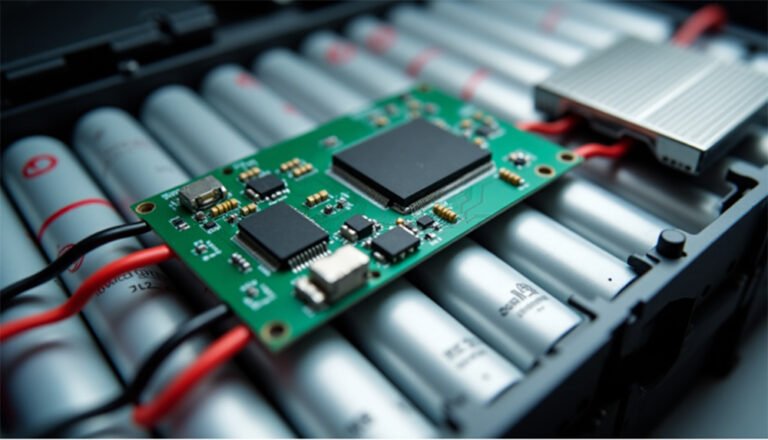
A well-designed BMS is essential for translating LiFePO₄’s theoretical cycle life into real-world performance.
Primary SEO Keywords:
LiFePO₄ BMS, lithium battery management system, DoD control lithium battery
How BMS Protects Cycle Life
A quality BMS manages:
- Charge and discharge voltage limits
- SOC and DoD thresholds
- Overcurrent protection
- Cell balancing
Without proper BMS control, even premium cells degrade rapidly.
DoD Limitation via Software
Modern BMS systems allow configurable DoD limits, enabling:
- Different profiles for day/night operation
- Seasonal SOC adjustments
- Application-specific lifespan optimization
Cell Balancing and Cycle Consistency
Imbalanced cells cause localized overcharge or overdischarge, which:
- Reduces usable capacity
- Accelerates degradation
- Increases failure risk
Active or passive balancing directly improves cycle consistency.
Integration with Inverters and EMS
BMS communication (CAN, RS485) ensures system-wide coordination, preventing destructive operating conditions.
Key Takeaway
Cycle life is enforced by control logic, not chemistry alone. A strong BMS is non-negotiable for long-term reliability.