
Keywords: rack mounted LiFePO4 battery, wall mounted lithium battery, LiFePO4 battery installation, energy storage system installation
Introduction
As LiFePO₄ batteries become the mainstream choice for residential and commercial energy storage systems, installation structure plays a critical role in safety, scalability, and long-term performance. Among all designs, rack-mounted and wall-mounted LiFePO₄ batteries are the two most commonly used types.
This article explains the key installation differences, helping installers, EPC contractors, and overseas buyers choose the right solution.
Rack-Mounted LiFePO₄ Battery Installation Overview
Rack-mounted batteries are typically 19-inch standard modules installed inside battery racks or cabinets.
Installation characteristics:
- Floor-standing rack or cabinet
- Horizontal module insertion
- Front-access terminals and communication ports
- Modular expansion (parallel stacking)
Typical applications:
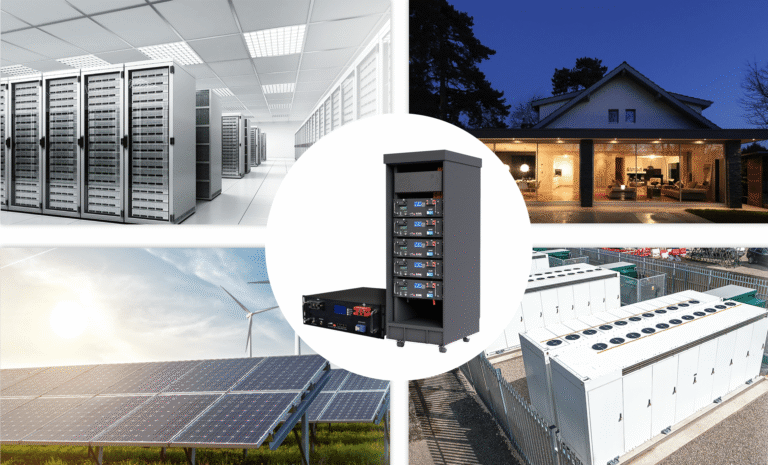
- Commercial & industrial (C&I) ESS
- Telecom base stations
- Data centers
- Large residential backup systems
Wall-Mounted LiFePO₄ Battery Installation Overview
Wall-mounted batteries are compact, integrated units designed to be fixed directly onto walls.
Installation characteristics:
- Vertical wall fixation
- All-in-one housing (battery + BMS)
- Limited expansion capability
- Clean and aesthetic appearance
Typical applications:
- Residential ESS
- Small offices
- Villas and apartments
Key Installation Differences
| Aspect | Rack-Mounted | Wall-Mounted |
|---|---|---|
| Load bearing | Floor-supported | Wall-supported |
| Scalability | High | Limited |
| Installation complexity | Medium–High | Low |
| Maintenance access | Front-access modules | Entire unit handling |
| Power capacity | High | Low–Medium |
Conclusion
Choosing between rack-mounted and wall-mounted LiFePO₄ batteries depends on available space, system size, and future expansion plans. Rack-mounted systems are ideal for scalable and professional installations, while wall-mounted units suit compact residential projects.