
Meta Description:
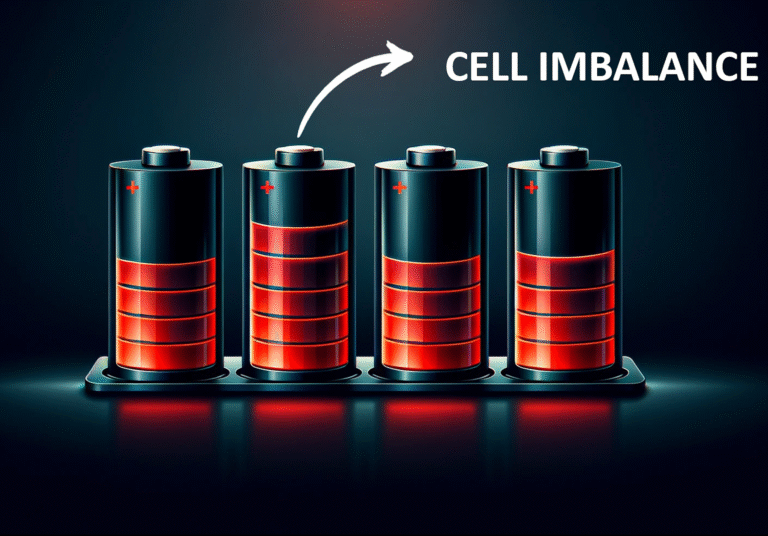
Parallel LiFePO4 battery systems showing uneven discharge or charging? This technical guide explains imbalance causes, circulating currents, BMS conflicts, and professional engineering solutions for energy storage systems.
Keywords: LiFePO4 parallel connection issues, lithium battery imbalance, ESS parallel battery problem, LiFePO4 current sharing
Introduction
Parallel connection is common in solar energy storage systems to increase capacity. However, improper parallel configuration often causes:
- Uneven charging
- Uneven discharging
- SOC mismatch
- Reduced system lifespan
- Unexpected shutdowns
Unlike lead-acid batteries, LiFePO4 systems include intelligent BMS units, which makes parallel behavior more complex.
This article provides a professional engineering-level analysis.
1. Initial Voltage Difference Before Parallel Connection
Even a 0.1V difference between two 48V battery packs can cause large equalization currents when connected directly.
Example:
- Battery A: 53.5V
- Battery B: 52.9V
When paralleled:
- Instant high current flows from A to B
- Possible BMS protection trigger
- Terminal damage risk
Engineering Rule:
Before parallel connection:
✔ Voltage difference < 0.05V
✔ SOC difference < 5%
2. Internal Resistance Mismatch
Each battery has slightly different internal resistance.
Lower resistance battery:
- Delivers more current
- Discharges deeper
- Ages faster
Higher resistance battery:
- Carries lighter load
- Appears “healthier” but underutilized
Over time this leads to severe imbalance.
Solution:
- Use same brand, same batch, same production date batteries
- Avoid mixing new and old batteries
- Prefer modular rack systems with active current sharing
3. Cable Length and Resistance Inequality
One of the most overlooked causes.
If cable lengths differ:
Battery closer to inverter:
- Lower resistance path
- Supplies more current
Battery farther:
- Supplies less current
Professional Design Recommendation:
Use diagonal connection method:
In 4-parallel system:
- Take positive from first battery
- Take negative from last battery
This equalizes path resistance.
4. Independent BMS Communication Conflict
Many LiFePO4 batteries use CAN or RS485.
If communication protocol:
- Is not synchronized
- Has no master-slave configuration
Then each BMS may:
- Calculate SOC independently
- Trigger protection at different times
- Cause one battery to disconnect
Result:
Remaining batteries overloaded → cascade shutdown
5. Circulating Current Between Packs
When packs have slightly different voltage curves:
Micro circulating currents may continuously flow.
Long-term effect:
- Heat buildup
- Efficiency loss
- Faster aging
Best Practices for Parallel ESS Design
✔ Ensure identical battery models
✔ Pre-balance voltage before connection
✔ Use symmetrical cable layout
✔ Enable master-slave BMS communication
✔ Install busbar with equal impedance design
✔ Monitor individual pack current
Conclusion
Parallel imbalance is not a battery defect.
It is usually a system design problem.
Professional engineering and installation standards ensure:
- Equal current sharing
- Extended lifespan
- Stable ESS operation