
Meta Description
Learn how to wire and configure BMS for LiFePO4 batteries. Improve safety, performance, and communication with inverters.
LiFePO4 Battery BMS Wiring Guide
Introduction
The Battery Management System (BMS) is the “brain” of a LiFePO4 battery system. Proper wiring ensures safe operation, accurate monitoring, and efficient performance.
What Does a BMS Do?
- Overcharge protection
- Over-discharge protection
- Temperature monitoring
- Cell balancing
BMS Wiring Components
- Power cables
- Balance wires
- Communication cables (CAN / RS485)
Step-by-Step BMS Wiring
Step 1 – Connect Cell Monitoring Wires
- Each wire connects to a cell
- Follow correct sequence
Step 2 – Connect Main Power Lines
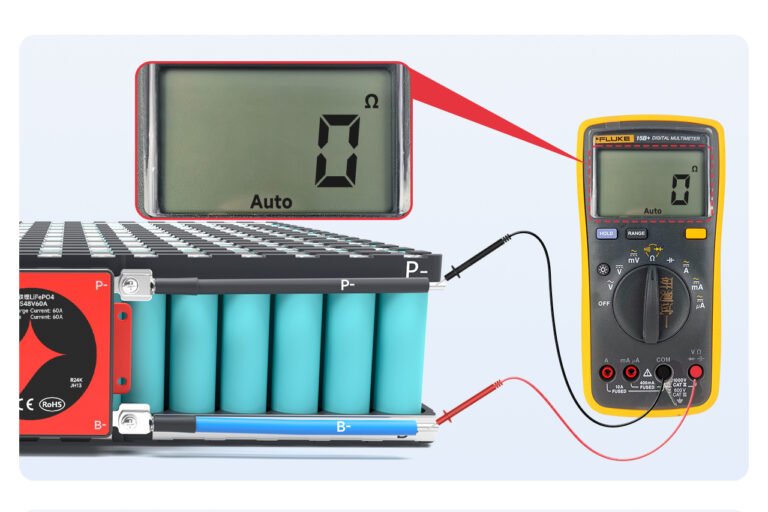
- B- to battery negative
- P- to load/inverter
Step 3 – Connect Communication Ports
- Match inverter protocol
- Configure address if multiple batteries
Step 4 – System Configuration
- Set voltage limits
- Set current limits
- Configure temperature protection
Common BMS Wiring Issues
- Incorrect balance wire sequence
- Loose connections
- Communication mismatch
Best Practices
- Use high-quality connectors
- Ensure proper insulation
- Test before full operation
Conclusion
Correct BMS wiring is essential for:
Battery longevity
Safety
Performance optimization