
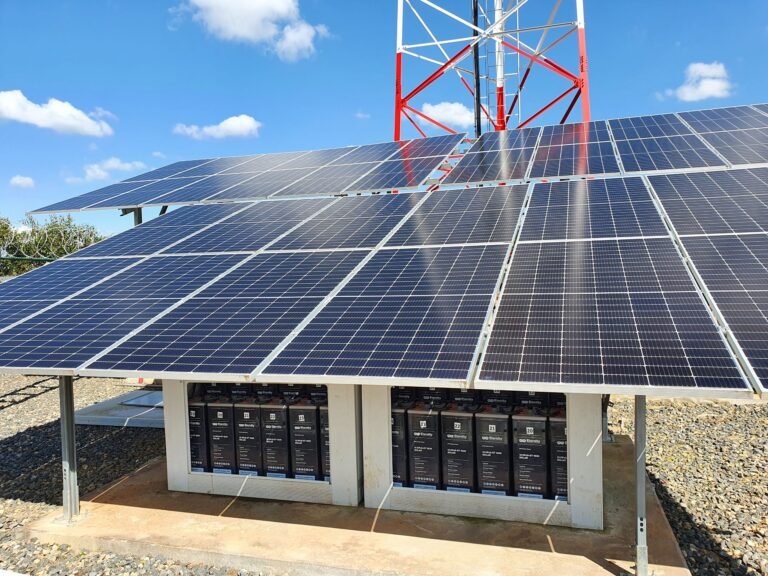
The Real Cost of a Telecom Tower Is Not the Equipment
When discussing telecom infrastructure, most people focus on equipment costs:
- Base stations
- Antennas
- Power systems
- Batteries
However, for network operators, the largest expense often comes after installation.
It comes from keeping thousands of sites operational every day.
For telecom operators managing large networks, maintenance costs can become one of the biggest operational challenges.
Every site visit requires:
- Technicians
- Vehicles
- Fuel
- Spare parts
- Administrative coordination
The more frequently a site requires attention, the higher the operating cost becomes.
Why Remote Sites Are the Most Expensive
Many telecom towers are located in:
- Rural villages
- Desert regions
- Mountainous areas
- Remote industrial zones
Reaching these locations can take several hours.
In some cases, technicians may need to travel hundreds of kilometers for a single maintenance task.
As networks continue expanding into underserved regions, maintenance efficiency becomes increasingly important.
Reducing the number of required site visits is now a major objective for many operators.
The Challenge with Traditional Battery Systems
For years, lead-acid batteries have been widely used in telecom applications.
They remain a proven technology.
However, operators often face challenges such as:
- Capacity degradation
- Frequent inspections
- Performance uncertainty
- Unexpected backup reductions
As network operators seek greater operational efficiency, many are reviewing whether traditional battery strategies still meet modern requirements.
Network Reliability Depends on Energy Reliability
A telecom tower can only provide communication services when power is available.
When battery performance becomes unpredictable, operators face increased risks of:
- Service interruptions
- Emergency maintenance
- Customer complaints
- Revenue loss
For this reason, battery systems are increasingly viewed as strategic infrastructure rather than simple backup equipment.
Why Maintenance Reduction Has Become a Priority
Across Africa and the Middle East, operators are under pressure to:
- Improve network coverage
- Reduce operating expenses
- Increase uptime
- Support growing data traffic
Simply adding more maintenance personnel is rarely the answer.
Instead, operators are looking for technologies that reduce the need for intervention in the first place.
The Shift Toward Smarter Energy Infrastructure
Modern telecom power systems increasingly include:
- Remote monitoring
- Energy management platforms
- Solar integration
- Intelligent battery systems
This allows network operators to monitor site performance without physically visiting every location.
The result is improved visibility and more efficient resource allocation.
Remote Monitoring Changes the Maintenance Model
Historically, many maintenance activities were reactive.
A problem occurred.
A technician was dispatched.
The issue was investigated on-site.
Today, operators increasingly use monitoring systems to identify potential issues before they affect network performance.
Remote visibility into battery status allows maintenance teams to:
- Prioritize critical sites
- Schedule preventive maintenance
- Reduce unnecessary inspections
This shift can significantly improve operational efficiency across large networks.
Reducing Generator Dependence
For many telecom sites, maintenance costs are closely linked to diesel generators.
Generators require:
- Fuel deliveries
- Routine servicing
- Component replacement
The more frequently generators operate, the more maintenance resources are required.
As operators integrate solar and battery storage, generator runtime can often be reduced.
This creates a secondary benefit:
Lower maintenance demand across the entire power system.
A Typical Network Upgrade Scenario
Consider a telecom operator managing several hundred remote sites.
Challenges include:
- High maintenance budgets
- Increasing fuel costs
- Long travel distances
- Aging backup power systems
Instead of simply replacing equipment, the operator adopts a broader energy modernization strategy.
The project includes:
- Improved battery systems
- Enhanced monitoring
- Better energy management
The objective is not only to improve backup performance.
The objective is to reduce long-term operational costs.
Why Site Visits Are Becoming a Key KPI
Many telecom operators now track:
- Number of maintenance visits
- Generator operating hours
- Site availability
- Mean time between failures
These metrics directly affect network profitability.
Reducing unnecessary site visits has become one of the most effective ways to improve operational efficiency.
What Operators Are Looking For Today
When evaluating telecom energy solutions, operators increasingly prioritize:
Operational Visibility
Knowing what is happening at each site.
Predictable Performance
Reducing unexpected failures.
Lower Maintenance Requirements
Reducing field intervention.
Scalability
Supporting future network growth.
Total Cost of Ownership
Looking beyond initial purchase price.
HIZN Engineering Perspective
In our experience, successful telecom energy projects are rarely driven by battery specifications alone.
The greatest benefits often come from improving how energy systems are managed and monitored.
When operators combine reliable battery systems with effective monitoring and long-term planning, they can significantly reduce maintenance requirements while improving network reliability.
Conclusion
For telecom operators, the true cost of a site extends far beyond the initial equipment investment.
Maintenance, fuel, logistics, and operational complexity all contribute to long-term expenses.
As networks expand across Africa and the Middle East, reducing maintenance costs has become a strategic priority.
Modern battery and energy management solutions are helping operators achieve this goal by improving visibility, reducing intervention requirements, and supporting more efficient network operations.
The future of telecom power is not only about keeping sites online.
It is about doing so with fewer visits, lower costs, and greater reliability.