
Keywords: LiFePO4 battery balancing, BMS, equalization, energy storage, voltage balance
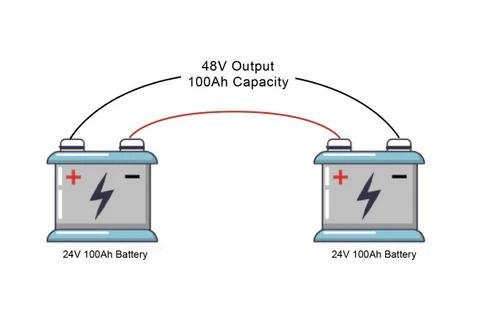
Balancing is a critical step in maintaining LiFePO4 battery pack health. Whether your system is connected in series or parallel, small voltage differences between cells can accumulate over time, reducing capacity and shortening lifespan.
1. Why Balancing Is Important
LiFePO4 cells naturally differ slightly in capacity and internal resistance. During operation, this leads to voltage drift—some cells charge faster than others. Without balancing, certain cells may overcharge or over-discharge, accelerating aging.
2. Passive vs. Active Balancing
- Passive Balancing:
The most common method. It uses resistors to dissipate excess energy as heat from higher-voltage cells. Simple but less efficient. - Active Balancing:
Transfers energy from higher-voltage cells to lower-voltage ones. This technique improves efficiency and is recommended for large energy storage systems.
3. When to Balance
Balancing should occur:
- Before initial assembly (pre-balance to equalize all cells).
- During charging, especially near full capacity.
- Periodically, using a BMS with built-in balancing or external equipment.
4. How to Maintain Balance
- Keep operating temperature uniform across all cells.
- Avoid overcharging (>3.65V) or deep discharging (<2.5V).
- Use matching cells with similar impedance and capacity.
- Inspect voltage regularly and rebalance if differences exceed 0.05V.
Conclusion
Consistent balancing improves system performance, cycle life, and safety. Whether you’re designing residential solar storage or industrial battery banks, investing in a smart BMS with active balancing is key to maintaining a reliable and efficient LiFePO4 battery system.