
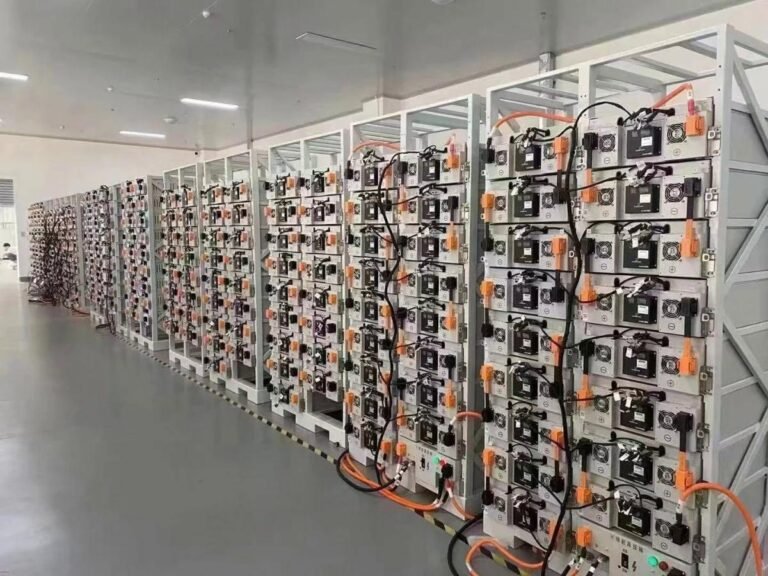
Keywords: LiFePO4 battery, parallel connection, energy storage expansion, battery capacity, system design
As renewable energy systems grow, users often need to expand their energy storage capacity without replacing the entire setup. One of the simplest ways to achieve this is by connecting LiFePO4 batteries in parallel. This method increases the available amp-hour (Ah) capacity and ensures a longer runtime for homes, offices, or industrial systems.
1. Why Choose Parallel Expansion?
Parallel connection allows for flexible scalability. When batteries are connected positive to positive and negative to negative, the total system voltage remains constant, while capacity increases.
Example:
Four 3.2V 100Ah batteries in parallel = 3.2V 400Ah system.
This configuration delivers higher current and longer operating time — ideal for:
- Off-grid solar installations
- Backup systems for telecommunications
- Energy storage for small factories or microgrids
2. Key Advantages of Parallel Systems
- Scalability: Add more batteries anytime to increase energy capacity.
- Redundancy: If one pack fails, others continue working.
- Improved Load Support: Handles larger loads without voltage drop.
- Cost Efficiency: You can expand gradually as energy demand grows.
3. Safety and Design Considerations
When adding new batteries in parallel, several precautions must be followed:
- Same Voltage Level: Always pre-balance voltage between old and new packs (within 0.05V).
- Same Capacity and Brand: Mixing cells with different capacities causes uneven current flow.
- Equal Cable Lengths: To ensure even current sharing, use cables of the same length and gauge.
- Fuse Protection: Install individual fuses or circuit breakers for each battery pack.
- Proper BMS Coordination: Each pack should have its own BMS, or a centralized BMS that supports multi-pack management.
4. Example Application
A solar energy user with a 48V 100Ah LiFePO4 system may find that it provides insufficient runtime. By adding another 48V 100Ah pack in parallel, total capacity doubles to 200Ah, extending the backup period significantly.
5. Conclusion
Parallel connection is the key to building modular, upgradable, and flexible LiFePO4 systems. With proper design and protection, users can easily scale up their storage capacity, ensuring stable and reliable energy for future needs.