
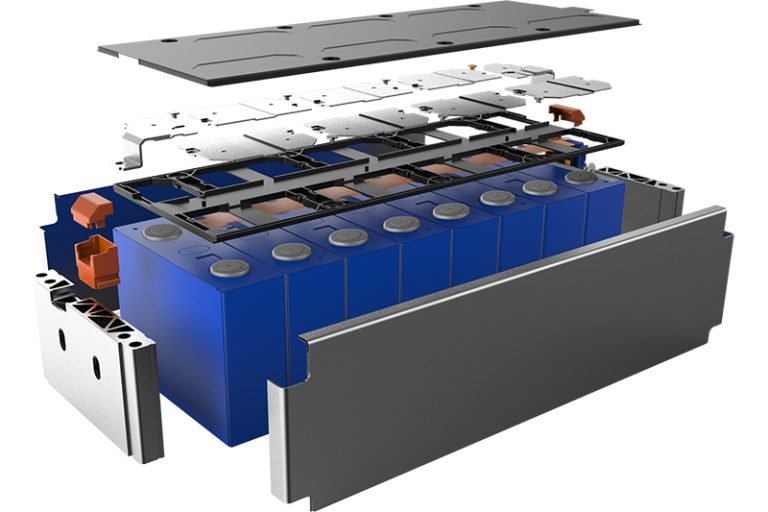
Meta Description
This article compares the internal structural differences between floor-standing and rack-mounted LiFePO₄ batteries, focusing on cell layout, BMS, cooling, and safety design.
Introduction
Floor-standing and rack-mounted LiFePO₄ batteries are both widely used in energy storage systems, yet their internal structures differ significantly due to installation method, capacity scale, and application scenarios.
Understanding these differences helps buyers choose the right battery architecture for their project.
1. Internal Capacity and Cell Density
Floor-Standing Batteries
- Larger cabinet volume
- Higher total capacity per unit (10–50 kWh)
- Larger prismatic cells or multi-module stacks
Rack-Mounted Batteries
- Compact standardized size (typically 19-inch)
- Lower single-unit capacity (5–10 kWh)
- High-density cell arrangement
Floor-standing designs prioritize thermal spacing and mechanical stability, while rack units emphasize compactness.
2. Cell Fixation and Mechanical Stress Design
Floor-standing batteries use:
- Reinforced frames
- Compression plates
- Anti-vibration structures
Rack-mounted batteries rely on:
- Lightweight brackets
- Limited compression zones
This makes floor-standing batteries more suitable for long-term high-load operation.
3. BMS Architecture Comparison
- Floor-standing batteries often use multi-level master–slave BMS
- Rack-mounted units usually adopt single-layer BMS
Distributed BMS systems allow floor-standing batteries to scale more safely and monitor large cell arrays more accurately.
4. Thermal Management Differences
- Floor-standing: natural convection + optional fans
- Rack-mounted: restricted airflow, higher internal heat density
Floor-standing cabinets offer more effective passive cooling paths.
5. Safety and Protection Design
Floor-standing batteries integrate:
- Larger contactors
- Higher-rated circuit breakers
- More internal isolation zones
This improves fault containment in commercial applications.
Conclusion
From an internal structural perspective, floor-standing LiFePO₄ batteries are better suited for large-capacity, long-duration, and expandable energy storage systems, while rack-mounted batteries excel in compact installations.
SEO Keywords:
floor-standing vs rack-mounted lithium battery, LiFePO₄ battery structure comparison, energy storage battery design