
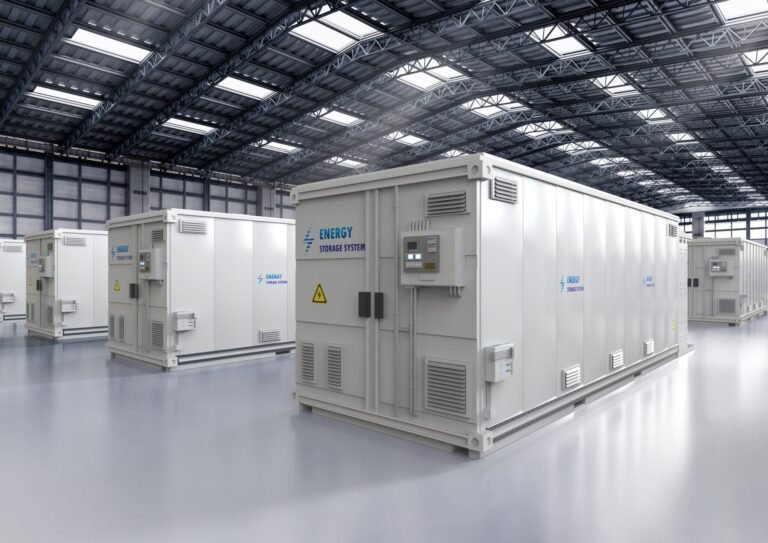
SEO Keywords: industrial LiFePO4 battery, commercial ESS battery, C&I battery storage, high-voltage LFP system
Commercial and industrial (C&I) energy storage systems require powerful, scalable, and highly reliable LiFePO₄ battery solutions. Choosing a suitable battery requires understanding your load profile, grid requirements, and system integration.
1. Evaluate Power and Energy Requirements
C&I ESS must support:
- Large peak loads
- Long discharge durations
- High current output
Typical requirements:
- 150–800V HV battery racks
- 50 kW to multiple MW inverter integration
2. Scalability and Cabinet Expansion
Industrial applications often need:
- Parallel connection across multiple cabinets
- Rack-based modular lithium systems
- Flexible kWh expansion
Choose battery systems that support:
- EMS (Energy Management System)
- Communication redundancy
- Hot-swapping
3. High Power Output & C-rate
Commercial systems require strong discharge capability.
Recommended:
- Continuous discharge ≥ 0.5C–1C
- Peak discharge ≥ 1.5C
- Stable output under high load
4. Advanced Thermal Management
Industrial ESS must operate 24/7.
Choose systems with:
- Active cooling (liquid or forced air)
- Temperature sensors at cell and module levels
- Thermal runaway isolation
- Heat dissipation channels
5. Long-term Durability & Project ROI
Commercial buyers look for:
- 6000+ cycles
- 15–20 year life design
- Low degradation (≤ 1.5% per year)
LiFePO₄ is ideal for long-term TCO (total cost of ownership).
6. Industry Certifications
Industrial projects require strict safety documentation:
- IEC62619
- UL1973
- UL9540A
- UN38.3
- CE / MSDS
Conclusion
Selecting LiFePO₄ batteries for commercial systems requires focusing on scalability, safety, thermal management, and system integration.