
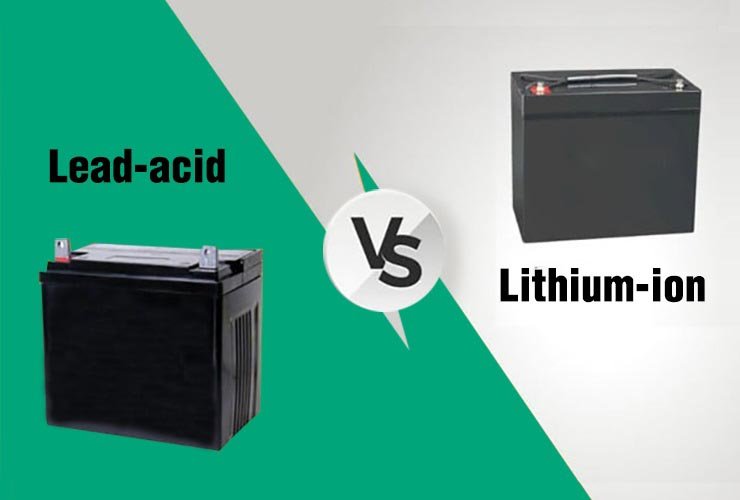
Primary keywords: LiFePO4 vs lead-acid, lithium battery vs lead acid, energy storage battery comparison
Secondary keywords: deep cycle battery, solar battery bank, long life battery
Introduction
For decades, lead-acid batteries dominated the energy storage market. However, with the rapid development of lithium technology, LiFePO₄ batteries have become the preferred solution for modern energy storage systems. This article provides a detailed technical and economic comparison between LiFePO₄ and lead-acid batteries to help system designers and end users make informed decisions.
1. Cycle Life and Usable Capacity
Lead-acid batteries:
- Typical cycle life: 500–1,500 cycles @ 50% DOD
- Recommended maximum DOD: 50–60%
- Effective usable capacity: only 50–60% of nominal
LiFePO₄ batteries:
- Typical cycle life: 4,000–8,000 cycles @ 80% DOD
- Recommended DOD: up to 80–90%
- Effective usable capacity: 80–90% of nominal
Conclusion:
LiFePO₄ provides 2–4 times more usable energy over its lifetime.
2. Efficiency and Charging Performance
- Lead-acid round-trip efficiency: 75–85%
- LiFePO₄ round-trip efficiency: 95–98%
LiFePO₄ batteries also support fast charging without sulfation or plate damage.
3. Maintenance and Reliability
Lead-acid batteries require:
- Periodic equalization charging
- Ventilation
- Water refilling (for flooded types)
LiFePO₄ batteries are maintenance-free and fully sealed.
4. Safety and Environmental Impact
- LiFePO₄: no cobalt, low fire risk, stable chemistry
- Lead-acid: toxic lead content, acid leakage risk
5. Total Cost of Ownership (TCO)
Although LiFePO₄ has a higher upfront cost, its long lifespan and higher efficiency result in a significantly lower cost per kWh delivered.
Conclusion
For almost all modern solar, backup, and off-grid energy storage systems, LiFePO₄ batteries clearly outperform lead-acid in safety, lifespan, efficiency, and long-term economics.