
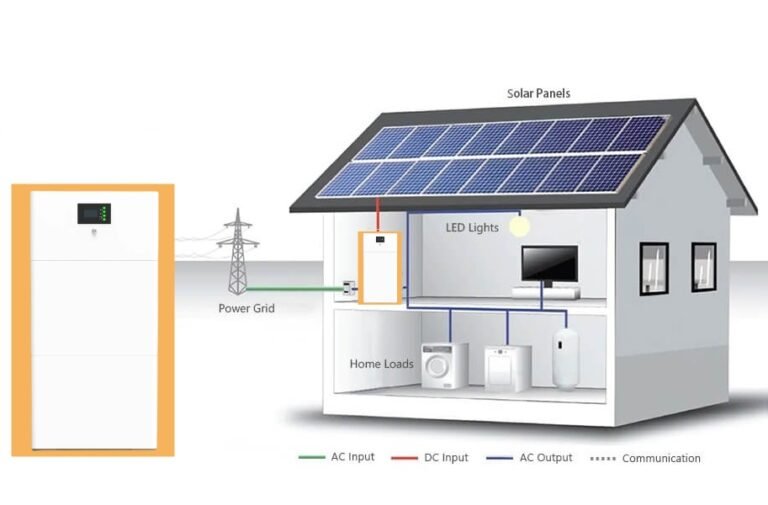
Introduction
Selecting LiFePO₄ battery capacity is not only about energy (kWh); it must also align with inverter power (kW). Improper matching between battery capacity and inverter rating can cause performance bottlenecks, inefficient cycling, or inverter shutdown due to insufficient discharge current capability.
SEO Keywords: LiFePO4 battery and inverter matching, battery kWh vs inverter kW, lithium battery power sizing ESS
1. Difference Between Energy Capacity and Power Capability
Battery capacity (kWh) indicates stored energy, while inverter power (kW) determines instantaneous load supply. A well-designed ESS balances both parameters.
- kWh → how long the system can run
- kW → how many appliances can run simultaneously
Ignoring this relationship can result in sufficient stored energy but inadequate output power.
2. Discharge Rate (C-rate) Consideration
LiFePO₄ batteries typically operate at 0.5C–1C continuous discharge rates.
Example:
- 20kWh battery at 0.5C → max continuous power = 10kW
- 20kWh battery at 1C → max continuous power = 20kW
Therefore:
Required Battery Capacity ≥ Inverter Power ÷ Allowable C-rate
3. Practical Matching Formula
Recommended design ratio:
Battery Capacity (kWh) ≈ Inverter Power (kW) × 1.5–2.5
Example:
10kW inverter → 15–25kWh battery bank
This ensures stable power delivery and avoids deep discharge stress.
4. High-Power Appliance Impact
Systems powering motors, compressors, or pumps require surge current support. Designers should ensure the battery can handle peak current bursts without voltage sag.
5. Modular ESS Strategy
Instead of installing a single oversized battery, multiple modular LiFePO₄ units can be paralleled to match inverter expansion plans, improving flexibility and redundancy.
Conclusion
Proper LiFePO₄ capacity selection must synchronize with inverter power rating and discharge capability. Balanced kWh and kW design guarantees stable operation, optimal performance, and longer battery life.