
Target keywords: LiFePO4 safety incidents, LFP battery emergency procedure, battery fire response, ESS safety
Meta Title: LiFePO₄ ESS Safety & Emergency Procedures — What to Do If Something Goes Wrong
Meta Description: Essential safety guidance for LiFePO₄ energy storage systems: how to handle leaks, thermal events, and fires, plus isolation and inspection protocols.
Summary
LiFePO₄ batteries are inherently safer than many chemistries but safety incidents (e.g., short circuit, mechanical damage, severe thermal runaway in rare cases) require clear emergency procedures.
Potential Incidents
- Thermal event or smoke.
- Electrical short or arcing.
- Mechanical damage (dropped modules) with exposed conductors.
- Water ingress causing shorts.
Immediate Actions (Emergency)
- Isolate the system: If safe to do so, disconnect AC sources and open battery DC breaker or use remote emergency disconnect.
- Evacuate non-essential personnel and keep a safe distance (follow your site emergency plan).
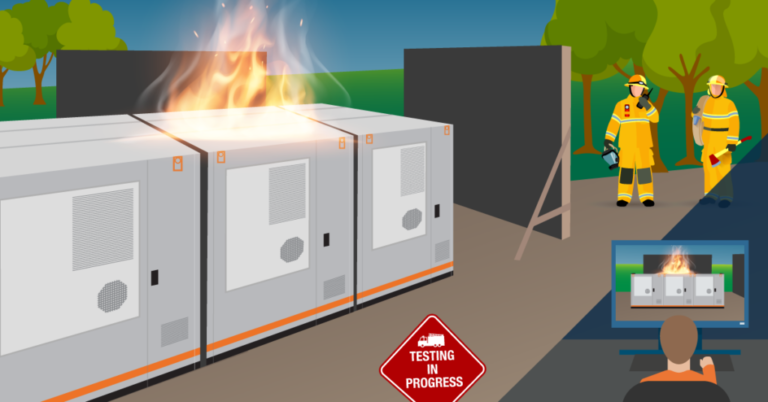
- Call emergency services for major smoke or fire — provide them with battery chemistry (LiFePO₄) and stored energy.
- Use appropriate extinguishers: For thermal events follow local guidelines — many battery fires are Class D (metal) or electrical. Firefighters typically use large amounts of water for thermal runaway suppression under professional guidance. Do not try to fight a large battery fire alone.
- Contain run-off: If firefighting water may enter drains, contain it and inform authorities as battery electrolyte can be hazardous.
Post-Incident Procedures
- Do not move hot or smoldering modules.
- Engage manufacturer / technical support immediately for RMA and disposal guidance.
- Arrange safe transport and recycling via certified battery handlers.
Preventive Safety Measures
- Install smoke/thermal sensors near battery racks.
- Use fire-rated battery cabinets and detection systems.
- Train on site staff for emergency isolation and first response.
- Conduct regular safety drills and have up-to-date emergency contact lists.
Quick FAQ
Q: Can I extinguish an LFP battery fire with a CO₂ extinguisher?
A: Small electrical fires can be addressed with CO₂ or dry chemical extinguishers if safe; large thermal runaway events require professional firefighting response. Follow local fire authority guidance.