
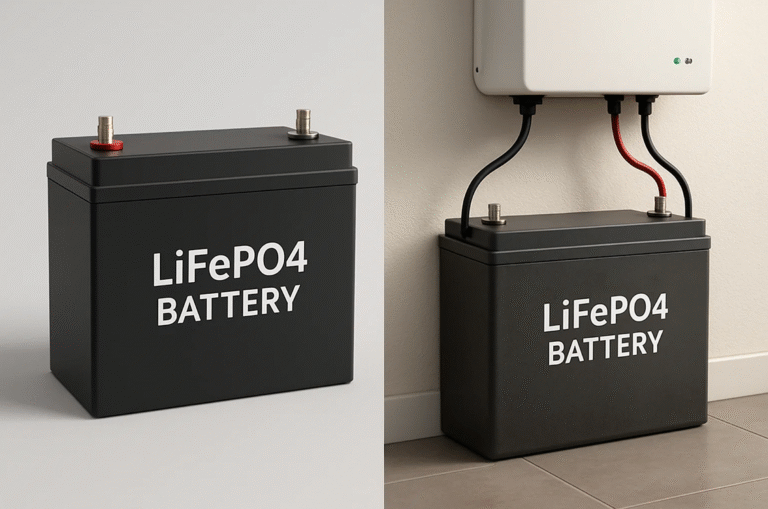
Why LiFePO4 Batteries Last Longer Than Lead-Acid Batteries
LiFePO4 batteries use more stable chemistry and experience:
- less sulfation
- lower internal degradation
- reduced heat generation
- more stable charge cycles
This significantly extends service life.
Typical Applications Benefiting from Long Lifespan
Residential ESS
Homeowners benefit from:
- reduced replacement frequency
- lower electricity costs
- long-term energy independence
Telecom Backup
Telecom operators reduce maintenance and battery replacement costs.
Off-Grid Solar Systems
Remote projects benefit from:
- fewer service visits
- higher reliability
- lower logistics expenses
Commercial ESS
Long cycle life improves investment return for large energy storage projects.
Common Mistakes That Reduce Battery Lifespan
Using Incorrect Chargers
Improper charging profiles can damage lithium batteries.
Installing Batteries in Extreme Heat
Poor ventilation may shorten battery life.
Using Poor-Quality Batteries
Cheap lithium batteries often use lower-grade cells and weaker BMS systems.
Frequent Overloading
Oversized loads may stress the battery system.
Signs of Battery Aging
Over time, aging batteries may show:
- reduced runtime
- slower charging
- voltage instability
- capacity loss
These changes occur gradually over many years.
Future Trends in Lithium Battery Lifespan
Battery technology continues improving rapidly.
Future LiFePO4 systems are expected to offer:
- even longer cycle life
- smarter BMS systems
- AI battery management
- improved thermal control
- higher energy density
Frequently Asked Questions
How many years does a LiFePO4 battery last?
Most quality LiFePO4 batteries last between 10 and 15 years.
How many cycles can a lithium battery achieve?
Typical LiFePO4 batteries provide 4000–7000 cycles.
Do lithium batteries degrade over time?
Yes, all batteries gradually age, but LiFePO4 batteries degrade much more slowly than lead-acid batteries.
What shortens lithium battery lifespan?
High temperatures, overcharging, poor-quality cells, and improper system design can reduce lifespan.
Are lithium batteries worth the investment?
For most solar and backup systems, yes. Their long lifespan and efficiency provide better long-term value.
Conclusion
LiFePO4 batteries are among the longest-lasting energy storage technologies available today.
Their advantages include:
- 10–15 year lifespan
- high cycle life
- low maintenance
- excellent efficiency
- superior thermal stability
Compared with traditional lead-acid batteries, LiFePO4 batteries provide much lower long-term operating costs and significantly better reliability.
For modern solar energy storage systems, telecom backup power, and off-grid applications, LiFePO4 batteries are becoming the global standard for long-life energy storage.
About HIZN Lithium
HIZN LITHIUM manufactures advanced lithium battery solutions for:
- Solar ESS systems
- Telecom backup
- UPS systems
- Residential energy storage
- Commercial ESS projects
Main products include:
- Rack-mounted lithium batteries
- Wall-mounted ESS batteries
- Lead-acid replacement LiFePO4 batteries
- Telecom lithium batteries
- High-voltage ESS systems
Customized OEM and project solutions are available worldwide.