
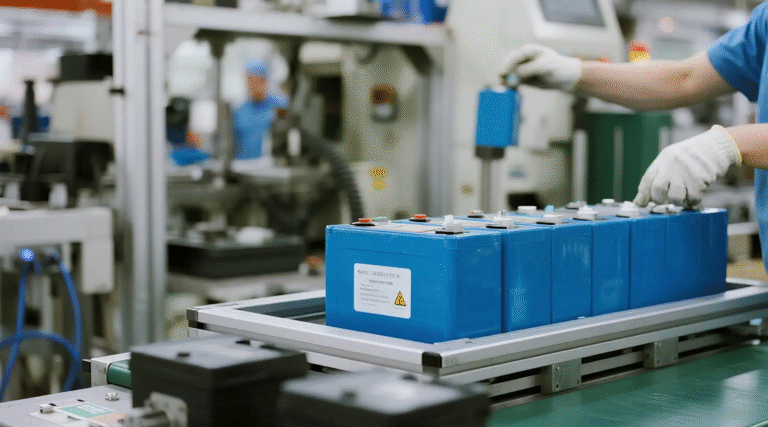
Introduction
As the global lithium battery market expands, more distributors are launching their own battery brands.
Instead of selling generic products, companies increasingly choose:
OEM Lithium Battery Manufacturing
OEM allows distributors to:
- build brand recognition
- improve customer loyalty
- increase profit margins
- differentiate from competitors
This guide explains how OEM lithium battery manufacturing works and what buyers should know before launching a private-label battery brand.
What Is OEM Lithium Battery Manufacturing?
OEM stands for:
Original Equipment Manufacturer
In this model:
- the factory manufactures the battery
- the customer sells under their own brand
The battery may include:
- custom logo
- custom label
- custom packaging
- custom user manual
Why Distributors Choose OEM
1. Build Brand Value
Customers remember brands.
Not factories.
A private-label battery helps build long-term market presence.
2. Higher Profit Margins
OEM products typically offer better margins than generic products.
3. Reduced Competition
Selling the same generic battery as everyone else often leads to price wars.
OEM branding helps differentiate products.
4. Customer Loyalty
A strong brand creates repeat business.
Most Popular OEM Products
Current demand focuses on:
Residential ESS Batteries
- 5kWh
- 10kWh
- 15kWh
Telecom Batteries
- 48V 100Ah
- 48V 200Ah
Lead-Acid Replacement Batteries
- 12.8V 100Ah
- 12.8V 200Ah
Commercial ESS Systems
- 51.2V 280Ah
- 51.2V 314Ah
Typical OEM Customization Options
Logo Printing
Most common request.
Methods include:
- silk screen printing
- UV printing
- laser marking
Label Design
Manufacturers can customize:
- specifications
- branding
- QR codes
Packaging Customization
Options include:
- color cartons
- branded cartons
- retail packaging
User Manual Customization
Can include:
- company logo
- contact information
- local language support
Advanced OEM Options
Some manufacturers also support:
- custom BMS
- Bluetooth integration
- WiFi monitoring
- LCD displays
- custom enclosure colors
OEM Process Step-by-Step
Step 1: Product Selection
Choose:
- battery type
- capacity
- application
Step 2: Branding Design
Provide:
- logo
- artwork
- packaging requirements
Step 3: Sample Approval
Factory produces sample units.
Customer confirms:
- appearance
- specifications
- functionality
Step 4: Mass Production
Production begins after approval.
Step 5: Quality Inspection
Professional inspection ensures consistency.
Step 6: Shipment
Products shipped according to customer requirements.
How to Choose an OEM Battery Factory
Look for:
- manufacturing experience
- automation level
- quality control
- export experience
Important Questions to Ask
Cell Supplier?
BMS Brand?
Warranty Period?
Certifications Available?
Production Capacity?
OEM vs ODM
Many buyers confuse these terms.
OEM
Customer provides branding.
Factory produces battery.
ODM
Factory also assists with product design.
Common Mistakes
Choosing Lowest Price
May result in quality issues.
Ignoring Sample Testing
Always verify performance before mass production.
Weak Branding
Strong packaging improves market perception.
Why China Leads OEM Manufacturing
China offers:
- mature supply chains
- competitive pricing
- advanced automation
- strong engineering capability
This is why many global battery brands manufacture in China.
Future of OEM Lithium Batteries
Growing demand for:
- residential ESS
- telecom batteries
- commercial storage
will continue driving OEM opportunities worldwide.
Frequently Asked Questions
What is the minimum order quantity for OEM batteries?
Requirements vary by manufacturer.
Can I use my own brand name?
Yes.
That is the primary purpose of OEM manufacturing.
Can packaging be customized?
Yes.
Most factories support custom packaging.
How long does OEM production take?
Typically depends on quantity and customization requirements.
Conclusion
OEM lithium battery manufacturing provides distributors with a powerful opportunity to build their own brands and increase profitability.
By choosing the right manufacturing partner, businesses can create differentiated products and establish a strong presence in the growing global energy storage market.