
6. LiFePO4 Battery Lifespan: How Long Do LiFePO4 Batteries Really Last?
One of the main reasons homeowners and businesses choose LiFePO4 batteries is their exceptionally long lifespan.
Unlike traditional lead-acid batteries that often require replacement every few years, LiFePO4 batteries are designed for long-term operation.
However, battery lifespan can be measured in two different ways:
Cycle Life
Cycle life refers to the number of complete charge and discharge cycles a battery can perform before its capacity falls to approximately 80% of its original value.
Example:
A battery charged from:
- 0% → 100%
and then discharged from:
- 100% → 0%
equals one cycle.
Calendar Life
Calendar life refers to how many years a battery remains operational regardless of usage.
A battery may still age even when not heavily cycled.
Typical LiFePO4 Lifespan Comparison
| Battery Type | Cycles | Service Life |
|---|---|---|
| AGM | 500–1200 | 3–5 Years |
| GEL | 800–1500 | 4–6 Years |
| OPzV | 2000–3000 | 8–12 Years |
| LiFePO4 | 4000–7000 | 10–15 Years |
Real-Life Example
Assume a home ESS battery experiences:
and the battery is rated for:
Then:
This explains why many energy storage projects expect over a decade of service life.
What Affects Battery Lifespan?
Several factors influence longevity.
Temperature
Heat is the number one enemy of battery life.
Recommended operating temperature:
Excessive heat accelerates:
- capacity degradation
- electrolyte aging
- internal resistance growth
Depth of Discharge (DOD)
Deeper discharges generally reduce cycle life.
Example:
| DOD | Expected Lifespan |
|---|---|
| 100% | Lowest |
| 90% | Excellent |
| 80% | Longer |
| 50% | Longest |
Charging Voltage
Improper charging settings may shorten battery life.
Most 51.2V batteries use:
Bulk Charge:
Float Charge:
Cell Quality
The lifespan difference between Grade A and lower-quality cells can be substantial.
Professional ESS manufacturers perform:
- cell matching
- capacity testing
- internal resistance sorting
before assembly.
7. Understanding Battery Capacity
One of the most misunderstood aspects of solar energy storage is battery capacity.
Many buyers confuse:
- Ah (Amp Hours)
- Voltage
- kWh (Kilowatt Hours)
Let’s simplify it.
What Is Ah?
Amp-hour measures charge storage.
Example:
100Ah battery means:
- 100A for 1 hour
- 10A for 10 hours
- 5A for 20 hours
under ideal conditions.
Why Ah Alone Is Misleading
Two batteries may both be:
- 100Ah
but have different voltages.
Example:
| Battery | Energy |
|---|---|
| 12.8V 100Ah | 1.28kWh |
| 51.2V 100Ah | 5.12kWh |
Clearly, Ah alone doesn’t tell the full story.
The Most Important Unit: kWh
Energy is measured by:
Example 1
12.8V 100Ah:
Example 2
51.2V 100Ah:
Example 3
51.2V 200Ah:
Example 4
51.2V 314Ah:
Most Popular ESS Capacities in 2026
| Battery Model | Energy |
|---|---|
| 51.2V100Ah | 5.12kWh |
| 51.2V200Ah | 10.24kWh |
| 51.2V280Ah | 14.34kWh |
| 51.2V314Ah | 16.07kWh |
| 51.2V400Ah | 20.48kWh |
Why 314Ah Batteries Are Becoming Popular
Historically:
- 100Ah dominated residential ESS
Today:
- 280Ah
- 300Ah
- 314Ah
cells are increasingly popular because they provide:
- higher energy density
- fewer connections
- lower installation cost
8. How to Size a Solar Battery System
One of the most searched questions on Google is:
What size battery do I need?
The answer depends on energy consumption.
Step 1: Determine Daily Energy Usage
Review utility bills.
Example:
Monthly consumption:
450kWh
Daily consumption:
Step 2: Determine Backup Requirements
Ask:
How long should the battery provide power?
Options:
- 4 hours
- overnight
- 24 hours
- multiple days
Step 3: Calculate Required Storage
Formula:
Example A: One Day Backup
Daily usage:
15kWh
Required battery:
Recommended:
- 16kWh ESS
Example B: Two-Day Backup
Daily usage:
15kWh
Backup:
2 days
Result:
Recommended:
- 32kWh ESS
Step 4: Consider DOD
LiFePO4 batteries typically support:
Therefore:
Required battery capacity:
Battery Sizing by Home Type
| Home Type | Daily Usage | Recommended ESS |
|---|---|---|
| Small Apartment | 5–8kWh | 5–10kWh |
| Small Home | 10–15kWh | 10–15kWh |
| Large Home | 15–25kWh | 15–30kWh |
| Villa | 25–40kWh | 30–50kWh |
9. Residential ESS Design Examples
Example 1: Basic Backup System
Customer Goal:
- Backup for lights
- Internet
- Refrigerator
Recommended:
- 51.2V100Ah Battery
- 5kW Hybrid Inverter
Storage:
5.12kWh
Example 2: Solar Self-Consumption System
Customer Goal:
- Maximize solar utilization
Recommended:
- 51.2V200Ah Battery
- 5–8kW Hybrid Inverter
Storage:
10.24kWh
Example 3: Energy Independence System
Customer Goal:
- Minimal grid dependence
Recommended:
- 2×51.2V314Ah Batteries
Total Storage:
Suitable for:
- large homes
- villas
- rural properties
Typical Residential ESS Architecture
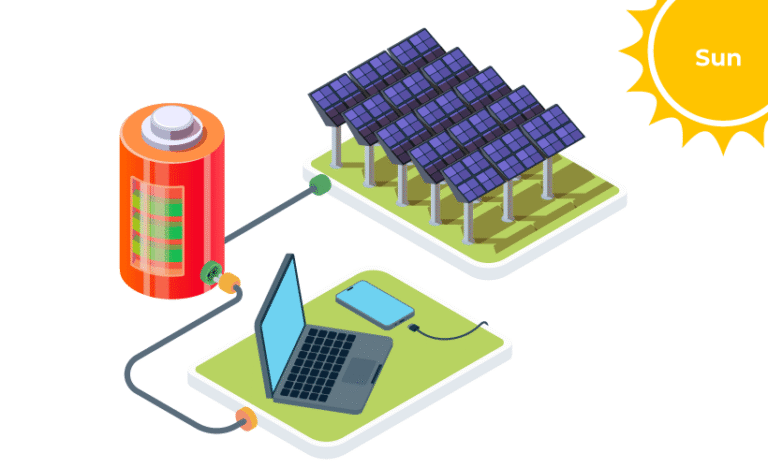
Solar Panels ➡️ Hybrid Inverter ➡️ LiFePO4 Battery ➡️ Home Loads ➡️ Utility Grid
Why Residential ESS Is Growing Globally
Main drivers:
- Rising electricity prices
- Power outages
- Net metering reductions
- Energy independence goals
Major growth markets include:
- Germany
- Italy
- Spain
- Australia
- South Africa
- United States