
Introduction
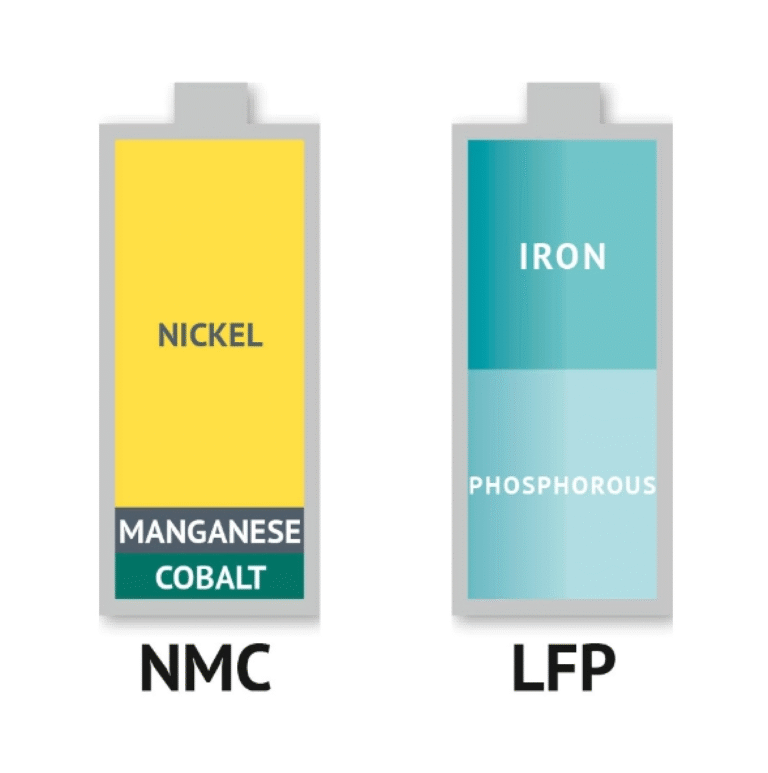
When choosing a lithium battery for solar energy storage, buyers often encounter two major battery chemistries:
- LiFePO4 (Lithium Iron Phosphate)
- NMC (Nickel Manganese Cobalt)
Both technologies are widely used, but they were designed for different applications.
Understanding the differences between these chemistries is critical for selecting the right battery for:
- residential ESS
- commercial ESS
- telecom backup
- off-grid solar systems
- industrial energy storage
This guide compares LiFePO4 and NMC batteries in detail.
What Is a LiFePO4 Battery?
LiFePO4 uses:
- Lithium
- Iron
- Phosphate
as the cathode material.
Key advantages include:
- long lifespan
- excellent thermal stability
- high safety
- low maintenance
LiFePO4 has become the dominant technology in energy storage systems.
What Is an NMC Battery?
NMC stands for:
Nickel Manganese Cobalt
These batteries offer:
- high energy density
- compact size
- lightweight construction
NMC batteries are commonly used in:
- electric vehicles
- consumer electronics
- portable devices
Safety Comparison
Safety is one of the biggest differences.
LiFePO4 Safety
LiFePO4 chemistry is extremely stable.
Advantages:
- low thermal runaway risk
- high temperature tolerance
- strong structural stability
NMC Safety
NMC batteries contain cobalt and nickel.
They generally require:
- more sophisticated cooling systems
- stricter thermal management
Safety Winner
✅ LiFePO4
Lifespan Comparison
Typical cycle life:
| Battery Type | Cycle Life |
|---|---|
| NMC | 1500–3000 |
| LiFePO4 | 4000–8000 |
Example
One cycle per day:
LiFePO4:
NMC:
Lifespan Winner
✅ LiFePO4
Energy Density Comparison
NMC batteries generally provide:
- higher energy density
- smaller size
- lower weight
Typical Energy Density
| Technology | Energy Density |
|---|---|
| LiFePO4 | 120–180 Wh/kg |
| NMC | 180–260 Wh/kg |
Energy Density Winner
✅ NMC
Cost Comparison
Historically:
- NMC batteries were more expensive
Today:
- costs vary by region and application
For ESS projects, LiFePO4 usually offers:
- lower total cost of ownership
because of longer lifespan.
Cost of Ownership Example
Suppose:
Battery A lasts:
5 years
Battery B lasts:
15 years
Even if Battery B costs more initially, it often becomes more economical over its lifetime.
Temperature Performance
LiFePO4 performs well in:
- telecom sites
- desert regions
- solar installations
NMC batteries are more sensitive to high temperatures.
Best Applications for LiFePO4
- Residential ESS
- Commercial ESS
- Telecom Backup
- Off-Grid Solar
- Industrial Storage
Best Applications for NMC
- Electric Vehicles
- Consumer Electronics
- Portable Devices
Why Most ESS Systems Use LiFePO4
The ESS industry prioritizes:
- safety
- lifespan
- reliability
over maximum energy density.
This is why LiFePO4 dominates energy storage applications.
Frequently Asked Questions
Which battery lasts longer?
LiFePO4.
Which battery is safer?
LiFePO4.
Which battery is lighter?
NMC.
Which battery is better for solar storage?
LiFePO4.
Conclusion
For energy storage systems, LiFePO4 batteries generally provide the best combination of:
- safety
- lifespan
- reliability
- cost effectiveness
While NMC batteries excel in portable and automotive applications, LiFePO4 remains the preferred technology for modern ESS projects.