
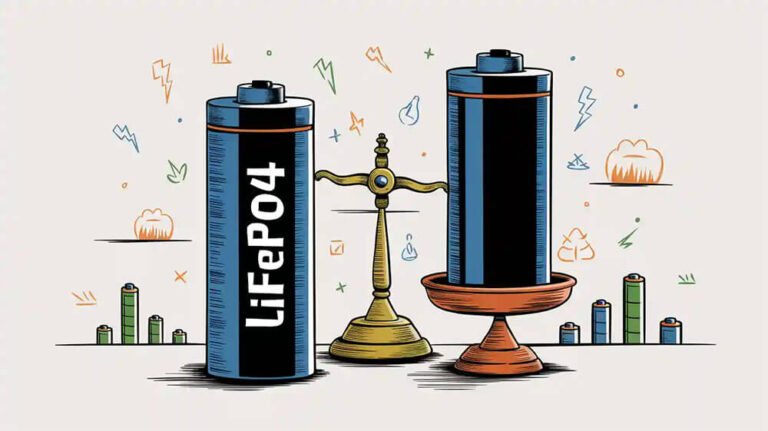
The Global Shift Toward Lithium Energy Storage
For more than 150 years, lead-acid batteries dominated the backup power and energy storage industry. From telecommunications and UPS systems to renewable energy and industrial power plants, lead-acid technology established itself as the global standard because it was reliable, relatively inexpensive, and supported by a mature manufacturing ecosystem.
Today, however, the landscape is changing rapidly.
Across Europe, North America, Australia, the Middle East, Southeast Asia, Africa, and South America, new energy storage projects are increasingly specifying LiFePO4 batteries instead of traditional lead-acid solutions.
This shift is not driven by marketing trends. It is the result of measurable improvements in:
- Lifetime operating cost
- Energy efficiency
- System reliability
- Installation flexibility
- Safety
- Environmental performance
As battery prices continue to decline and electricity costs continue to rise, lithium batteries have become the preferred choice for both residential and commercial energy storage projects.
Why Lead-Acid Batteries Dominated for So Long
To understand why lithium batteries are replacing lead-acid batteries, it is helpful to understand why lead-acid technology became dominant in the first place.
For decades, lead-acid batteries offered several important advantages:
- Mature manufacturing technology
- Relatively low purchase cost
- Well-established recycling systems
- Broad availability worldwide
Industries such as telecommunications, emergency power systems, substations, and industrial UPS installations relied heavily on lead-acid technology because there were few viable alternatives.
Common lead-acid battery types include:
- Flooded Lead-Acid Batteries
- AGM (Absorbent Glass Mat)
- GEL Batteries
- OPzS Tubular Batteries
- OPzV Tubular Gel Batteries
- Lead-Carbon Batteries
Each represented an improvement over previous generations, but all still shared the same fundamental limitations associated with lead chemistry.
Why the Energy Storage Industry Began Looking for Alternatives
As solar energy became more affordable, users expected batteries to cycle every day instead of only during occasional power outages.
This created new requirements:
- Thousands of charge/discharge cycles
- Higher charging efficiency
- Deeper discharge capability
- Lower maintenance
- Smaller installation footprint
- Better integration with intelligent inverters
Lead-acid batteries were never originally designed for this level of daily cycling.
Lithium technology, particularly LiFePO4 chemistry, was.
Comparison 1: Service Life
Battery lifespan is one of the largest contributors to total project cost.
Below is a typical comparison.
| Battery Technology | Typical Cycle Life | Expected Service Life |
|---|---|---|
| Flooded Lead Acid | 500–1000 cycles | 3–5 years |
| AGM | 600–1200 cycles | 3–5 years |
| GEL | 800–1500 cycles | 4–6 years |
| OPzS | 1800–3000 cycles | 8–12 years |
| OPzV | 2000–3500 cycles | 10–12 years |
| LiFePO4 | 4000–8000+ cycles | 10–20 years |
A residential ESS battery cycled once every day may operate reliably for well over a decade with LiFePO4 technology.
This dramatically reduces replacement frequency and long-term ownership costs.
Comparison 2: Depth of Discharge (DOD)
One of the most misunderstood battery specifications is Depth of Discharge (DOD).
DOD describes how much of a battery’s stored energy can be used before recharging.
For example:
A battery with a rated capacity of:
10 kWh
and a recommended DOD of:
50%
provides only:
5 kWh
of usable energy.
Lead-Acid Batteries
To maximize lifespan, most lead-acid batteries should only be discharged to around:
Repeated deep discharge significantly shortens service life.
LiFePO4 Batteries
Modern LiFePO4 batteries are commonly designed to operate at:
or even higher without substantial degradation.
This means a 10 kWh lithium battery provides nearly twice the usable energy of a similarly rated lead-acid battery.
Comparison 3: Charging Efficiency
Charging efficiency directly affects how much solar energy is actually stored.
Typical charging efficiencies are:
| Battery Type | Round-Trip Efficiency |
| Flooded Lead Acid | 70–80% |
| AGM | 75–85% |
| GEL | 80–85% |
| OPzV | 85–90% |
| LiFePO4 | 95–98% |
Higher efficiency means:
- Less energy wasted as heat
- Faster battery charging
- Better utilization of solar generation
- Lower electricity costs over time
Comparison 4: Charging Speed
Charging speed has become increasingly important for hybrid solar systems.
Cloudy weather, short winter days, and time-of-use electricity tariffs all make rapid charging valuable.
Lead-acid batteries require multiple charging stages and relatively long absorption periods.
LiFePO4 batteries can accept higher charging currents and reach full charge much faster.
For users relying on diesel generators during outages, this translates directly into lower fuel consumption and reduced generator operating time.
Comparison 5: Maintenance Requirements
One of the biggest operational differences between the two technologies is maintenance.
Lead-Acid Batteries Often Require
- Regular inspections
- Terminal cleaning
- Corrosion prevention
- Voltage balancing
- Periodic replacement planning
Flooded batteries also require electrolyte maintenance.
LiFePO4 Batteries Typically Require
- Visual inspection
- Firmware updates (if applicable)
- Routine system monitoring
There is no electrolyte maintenance and no watering.
For remote telecom sites and unmanned installations, this represents a major operational advantage.
Comparison 6: Installation Space
Energy density determines how much energy can be stored within a given physical volume.
LiFePO4 batteries generally offer significantly higher energy density than lead-acid batteries.
This results in:
- Smaller battery rooms
- Lower transportation costs
- Easier installation
- Reduced structural loading
In residential applications where installation space is limited, this advantage is particularly valuable.
Comparison 7: Weight
Weight affects transportation, installation, and building requirements.
A lithium battery providing the same usable energy as a lead-acid battery is often dramatically lighter.
For installers, lighter batteries reduce:
- Labor costs
- Installation time
- Structural reinforcement requirements
Comparison 8: Safety
Safety is frequently misunderstood.
Some people assume that all lithium batteries behave the same way.
In reality, different lithium chemistries have very different safety characteristics.
LiFePO4 chemistry offers excellent thermal stability because of its crystal structure.
Compared with several other lithium chemistries, it has:
- Lower thermal runaway risk
- Better temperature tolerance
- Greater chemical stability
This makes it especially suitable for stationary energy storage systems.
Comparison 9: Total Cost of Ownership (TCO)
Initial purchase price tells only part of the story.
Professional project developers evaluate:
Total Cost of Ownership (TCO)
This includes:
- Initial purchase
- Installation
- Maintenance
- Replacement
- Energy losses
- Downtime
- Labor costs
In many long-term projects, LiFePO4 batteries achieve a lower lifetime cost despite a higher initial investment because they last significantly longer and require less maintenance.
This is one of the primary reasons utilities, telecom operators, and commercial facilities increasingly specify lithium batteries in new projects.
Comparison Summary
| Feature | Lead-Acid Batteries | LiFePO4 Batteries |
| Service Life | Moderate | Excellent |
| Cycle Life | Low | Very High |
| Usable Capacity | Limited | High |
| Charging Speed | Slow | Fast |
| Maintenance | Regular | Minimal |
| Weight | Heavy | Light |
| Energy Density | Low | High |
| Round-Trip Efficiency | Moderate | Excellent |
| Scalability | Limited | Excellent |
| Long-Term Operating Cost | Higher | Lower |
When Lead-Acid Batteries Still Make Sense
Although LiFePO4 batteries are becoming the preferred choice for many applications, lead-acid batteries remain appropriate in certain situations.
Examples include:
- Projects with very limited initial budgets
- Legacy systems designed specifically for lead-acid batteries
- Applications requiring infrequent cycling
- Temporary backup installations
Selecting the right battery technology should always be based on the application’s technical and economic requirements rather than purchase price alone.
Key Takeaways
The transition from lead-acid to LiFePO4 is being driven by measurable engineering and economic advantages rather than short-term market trends.
For projects involving daily cycling, renewable energy integration, or long service life requirements, LiFePO4 batteries offer compelling benefits in terms of efficiency, maintenance, scalability, and total cost of ownership.
In the next chapter, we will explore one of the most common questions buyers ask:
How long do LiFePO4 batteries really last, and what factors determine their actual service life?