
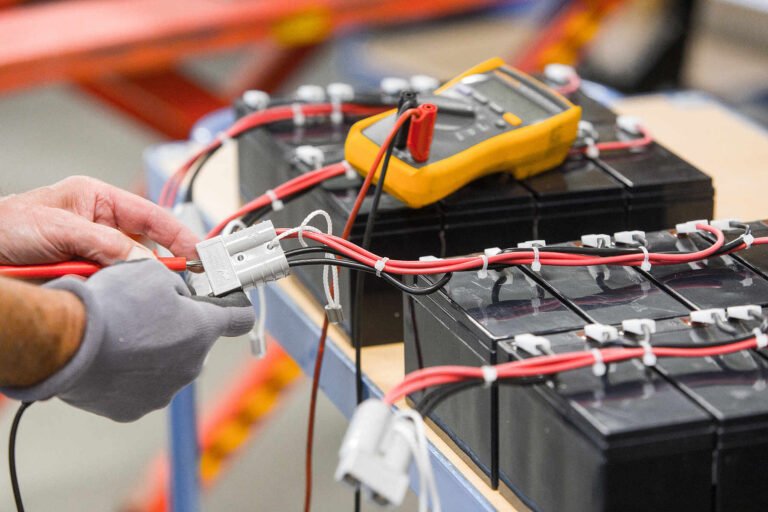
Meta Description
Explore professional tools and methods for testing battery internal resistance. Learn how to improve accuracy and ensure battery quality.
Battery Internal Resistance Testing Tools and Methods
Introduction
Accurate internal resistance testing is essential for evaluating LiFePO4 battery quality and ensuring consistency in energy storage systems.
This guide covers the most widely used tools and methods in the industry.
Main Types of Testing Methods
DC Load Method
- Applies a known current load
- Measures voltage drop
- Simple but less precise
AC Impedance Method (Industry Standard)
- Uses AC signals (typically 1kHz)
- Measures impedance accurately
- Fast and repeatable
Common Testing Equipment
Handheld Internal Resistance Testers
- Portable
- Suitable for field testing
Benchtop Impedance Analyzers
- High accuracy
- Used in laboratories and factories
Battery Management Systems (BMS)
- Some advanced BMS can estimate resistance
- Useful for real-time monitoring
Comparison of Methods
| Method | Accuracy | Cost | Application |
|---|---|---|---|
| DC Method | Medium | Low | Basic testing |
| AC Method | High | Medium/High | Professional use |
Best Practices for Accurate Testing
- Test at stable temperature (25°C recommended)
- Keep SOC consistent (30%–70%)
- Use calibrated equipment
Common Errors
- Poor contact resistance
- Inconsistent test conditions
- Using low-quality testers
Conclusion
Choosing the right testing method and tool ensures reliable internal resistance data, which is crucial for battery performance and system design.