
Introduction
Solar farms are rapidly becoming one of the most important sources of electricity worldwide.
However, solar generation faces a fundamental challenge:
Solar panels only produce electricity when the sun is shining.
This creates a mismatch between:
- energy generation
- energy consumption
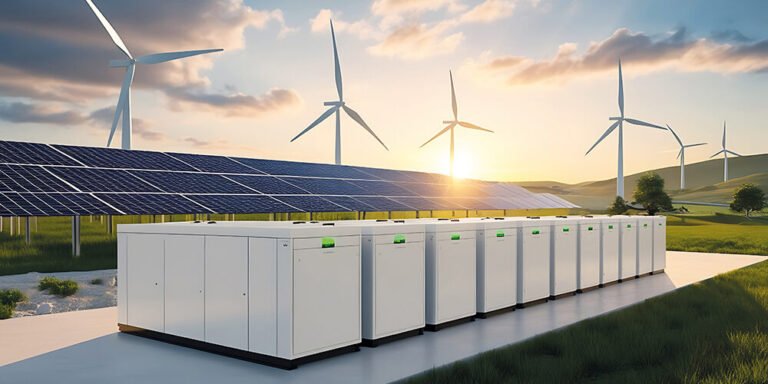
Battery Energy Storage Systems (BESS) solve this problem by storing excess solar power and releasing it when demand increases.
Today, battery storage is becoming an essential component of modern solar farms.
This guide explains how solar farm energy storage works and why lithium battery technology dominates new projects.
Why Solar Farms Need Battery Storage
Without storage:
Solar generation peaks during midday.
Electricity demand often peaks:
- early morning
- evening
- nighttime
This mismatch limits solar utilization.
Benefits of Battery Storage
Battery systems help:
- reduce curtailment
- increase self-consumption
- improve grid stability
- support peak demand
- generate additional revenue
Solar Farm Challenges Without Storage
Common issues include:
Solar Curtailment
Excess electricity may be wasted.
Grid Congestion
Power output may exceed local grid capacity.
Price Volatility
Electricity prices fluctuate throughout the day.
Limited Dispatchability
Solar power alone cannot be dispatched on demand.
How Battery Energy Storage Works
Basic system architecture:
Solar Panels ➡️ Inverters ➡️ Battery Energy Storage System ➡️ Grid Connection ➡️ Consumers
Charging Phase
During high solar production:
- batteries charge
- excess energy is stored
Discharging Phase
During peak demand:
- batteries discharge
- stored energy is exported
Most Popular Battery Technologies
Historically:
- Lead-acid
- Flow batteries
- Sodium batteries
Today:
LiFePO4 dominates most new ESS installations.
Why LiFePO4 Is Preferred
Long Cycle Life
Utility-scale systems require daily cycling.
Typical lifespan:
High Efficiency
Typical round-trip efficiency:
Excellent Safety
LiFePO4 offers:
- strong thermal stability
- low thermal runaway risk
Low Maintenance
Large-scale projects benefit from reduced maintenance requirements.
Typical Solar Farm Storage Sizes
Storage requirements vary greatly.
Small Commercial Solar Farm
Storage:
- 100kWh–500kWh
Medium Solar Farm
Storage:
- 500kWh–5MWh
Utility Scale Project
Storage:
- 10MWh+
- 50MWh+
- 100MWh+
Revenue Streams from Battery Storage
Battery systems create multiple income opportunities.
Peak Shaving
Reduce peak electricity purchases.
Time-of-Use Optimization
Charge during low-price periods.
Discharge during high-price periods.
Grid Services
Provide:
- frequency regulation
- voltage support
- reserve capacity
Solar Firming
Improve predictability of solar generation.
Key Design Considerations
Battery Chemistry
LiFePO4 is currently the dominant choice.
Capacity
Must match:
- generation profile
- load profile
Power Rating
Battery power output should support intended applications.
Environmental Conditions
Temperature affects performance.
Future of Solar Farm Storage
Industry trends include:
- larger battery systems
- AI energy management
- hybrid renewable projects
- virtual power plants
Battery storage will become increasingly integrated with solar generation.
Frequently Asked Questions
Are batteries required for solar farms?
Not always, but they provide significant economic and operational benefits.
What battery chemistry is most common?
LiFePO4.
How long do solar farm batteries last?
Typically 10–15 years.
Conclusion
Battery storage is transforming solar farms from intermittent generators into flexible energy assets.
LiFePO4 batteries provide:
- safety
- efficiency
- scalability
- long lifespan
making them the preferred technology for modern solar farm energy storage systems.