
Introduction
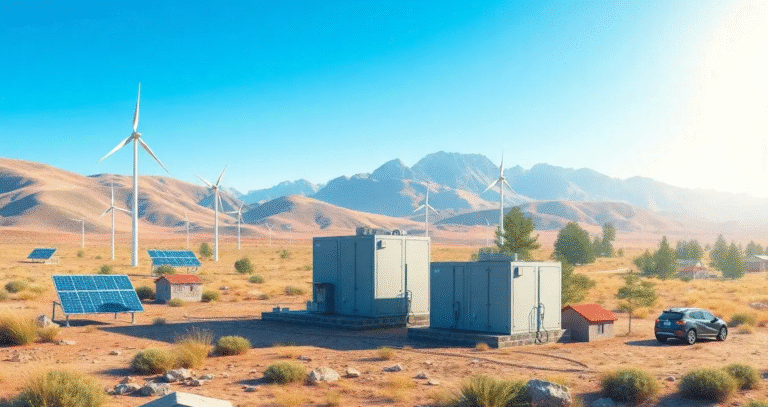
Battery energy storage projects in desert regions cannot be designed in the same way as systems installed in mild climates.
In Saudi Arabia, the UAE, Oman, Kuwait, Iraq, Jordan, and parts of North Africa, outdoor temperatures may rise above 45°C during summer. Equipment installed inside metal cabinets or containers may experience even higher internal temperatures, especially when exposed to direct solar radiation.
For EPC contractors and project developers, this creates a critical engineering challenge:
The battery system must continue operating safely and reliably without allowing extreme heat, dust, or poor ventilation to shorten its service life.
Choosing a battery with a wide operating-temperature range is only the beginning.
Long-term desert performance also depends on:
- System architecture
- Thermal management
- Enclosure design
- Installation location
- Charging and discharging strategy
- Dust protection
- Maintenance planning
- Remote monitoring
This guide explains the most important considerations when designing battery energy storage systems for extreme desert environments.
Why Desert BESS Projects Require a Different Design Approach
A battery datasheet may show that the product can discharge at temperatures up to 55°C or 60°C.
However, this does not mean the battery should operate continuously at those temperatures throughout its entire service life.
There is an important difference between:
- Maximum allowable operating temperature
- Recommended continuous operating temperature
A system may remain operational at high temperature while still experiencing accelerated aging.
For commercial, industrial, telecom, oil and gas, and utility projects, the objective is not simply to keep the battery running during the hottest day.
The objective is to maintain reliable capacity, acceptable degradation, and predictable performance for many years.
Ambient Temperature Is Not the Same as Battery Temperature
One of the most common design mistakes is using local weather data as the expected battery operating temperature.
Consider the following situation:
- Outdoor temperature: 47°C
- Metal cabinet exposed to sunlight
- Limited internal airflow
- Inverter installed in the same enclosure
- Battery charging at high current
Under these conditions, the internal cabinet temperature may become significantly higher than the surrounding air.
The battery is affected by several heat sources:
- Ambient temperature
- Direct solar radiation
- Internal electrical losses
- Heat produced by nearby equipment
- Restricted airflow inside the enclosure
Therefore, thermal design should be based on the expected internal equipment temperature, not only the published outdoor temperature.
Why Heat Reduces Battery Service Life
Higher temperatures accelerate chemical reactions inside battery cells.
Over time, excessive heat may contribute to:
- Faster capacity degradation
- Increased internal resistance
- Reduced cycle life
- Greater cell imbalance
- More frequent BMS protection events
- Reduced long-term backup capability
LiFePO4 chemistry offers strong thermal stability compared with many other lithium-ion chemistries, which makes it suitable for stationary energy storage.
However, no rechargeable battery is completely unaffected by prolonged heat exposure.
Thermal management remains one of the most important factors in desert ESS design.
Battery Chemistry Is Only One Part of the Decision
LiFePO4 batteries are widely selected for hot-climate stationary storage because they offer:
- Stable chemistry
- Long cycle life
- High usable capacity
- Low maintenance
- Strong daily-cycling capability
But procurement teams should avoid selecting a battery based only on chemistry.
Two LiFePO4 systems may perform very differently depending on:
- Cell quality
- Cell matching
- BMS design
- Internal busbar design
- Cable and terminal sizing
- Cabinet ventilation
- Thermal sensors
- Protection logic
The complete battery system should be evaluated, not only the cell chemistry listed in the specification.
Indoor Installation Should Be Considered First
Where practical, batteries should be installed inside a dedicated equipment room rather than in an exposed outdoor location.
Indoor installation generally provides:
- Lower temperature variation
- Better protection from sunlight
- Reduced dust exposure
- Easier maintenance access
- Improved security
An indoor location does not always require full air conditioning.
Depending on project size and local conditions, an equipment room may use:
- Natural ventilation
- Forced ventilation
- Controlled air conditioning
- Hybrid cooling strategies
The thermal design should be based on the expected heat load and required battery service life.
Outdoor Installation Requires More Than an IP Rating
Many project specifications request an IP54, IP55, or IP65 enclosure.
Ingress protection is important, especially in dusty and exposed environments.
However, a high IP rating does not guarantee good thermal performance.
In fact, heavily sealed enclosures may trap heat.
This creates a design trade-off:
- The cabinet must prevent dust and water ingress.
- The cabinet must also remove internal heat.
Professional outdoor ESS cabinet design may include:
- Filtered ventilation
- Heat exchangers
- Air-conditioning units
- Insulated wall panels
- Sun shields
- Double-roof structures
- Temperature-controlled fans
- Separate hot and cold air paths
The appropriate method depends on system size, duty cycle, and local conditions.
Direct Solar Radiation Must Be Controlled
Direct sunlight can significantly increase enclosure temperature.
This is especially important for:
- Outdoor telecom cabinets
- Commercial ESS cabinets
- Containerized storage systems
- Remote oil and gas installations
- Agricultural solar systems
Recommended measures include:
External Shading
Install the cabinet beneath a canopy or purpose-built shade structure.
Double-Roof Design
A ventilated upper roof reduces heat transfer into the main enclosure.
Light-Colored Coatings
Light or reflective surfaces absorb less solar energy than dark finishes.
Correct Orientation
Where site layout allows, reduce direct exposure to intense afternoon sunlight.
These measures are usually simpler and less expensive than correcting thermal problems after commissioning.
Separate Batteries from Major Heat Sources
Battery cabinets should not be installed immediately beside equipment that produces significant heat.
Examples include:
- High-power inverters
- Transformers
- Diesel generators
- Rectifiers
- HVAC exhaust outlets
- Industrial machinery
When batteries and inverters are installed in the same equipment room or cabinet, the total heat load should be calculated.
Adequate spacing and airflow paths help prevent heat from one component affecting another.
Thermal Management Options for Desert ESS Projects
The correct cooling method depends on system capacity and application.
Natural Ventilation
Suitable for:
- Small indoor installations
- Low-current standby systems
- Shaded locations
Limitations:
- Dependent on ambient air temperature
- Less effective during extreme summer conditions
Forced-Air Ventilation
Suitable for:
- Outdoor cabinets
- Telecom sites
- Small commercial systems
Important considerations:
- Dust filters
- Fan redundancy
- Maintenance access
- Alarm monitoring
Air-Conditioned Battery Rooms
Suitable for:
- Commercial ESS
- Industrial systems
- Mission-critical projects
- High-value battery installations
Advantages:
- Stable battery temperature
- More predictable aging
- Better long-term performance
Containerized HVAC Systems
Suitable for:
- Large commercial and utility systems
- Oil and gas facilities
- Microgrids
- Large telecom hubs
These systems require careful control of:
- Airflow
- Temperature distribution
- Condensation
- HVAC redundancy
- Emergency power
Dust Is Both a Mechanical and Thermal Problem
Desert dust is not only an enclosure-protection issue.
Dust accumulation may also affect:
- Cooling performance
- Fan efficiency
- Heat-exchanger performance
- Electrical connections
- Filters
- Sensors
A system that performs well during commissioning may gradually overheat if filters and ventilation channels are not maintained.
Therefore, desert ESS projects should include a defined maintenance plan covering:
- Filter inspection
- Cabinet cleaning
- Fan inspection
- Ventilation-path checks
- Terminal inspection
Maintenance intervals should reflect actual site conditions rather than generic recommendations.
Battery Systems May Require Power Derating
Operating at the maximum charge or discharge current during extreme heat may place additional stress on the battery system.
Depending on product design and project requirements, the system may need to reduce current when temperatures rise.
This is known as thermal derating.
A suitable BMS or energy management strategy may:
- Reduce charging current
- Reduce discharge current
- Limit peak power
- Trigger alarms
- Disconnect the battery under extreme conditions
For critical projects, the expected derating behavior should be reviewed before supplier approval.
Do Not Size the Battery Only for the Beginning of Life
Battery capacity gradually decreases over time.
In high-temperature environments, degradation may occur faster than expected if thermal management is inadequate.
A professional design should consider:
- Required capacity at commissioning
- Expected degradation
- End-of-life capacity
- Future load growth
- Seasonal operating conditions
If a project requires 100kWh of usable capacity after several years, the initial installed capacity may need to be higher.
The correct reserve depends on:
- Battery warranty conditions
- Operating temperature
- Cycling frequency
- Depth of discharge
- Project service-life requirement
Cooling Systems Must Be Included in the Energy Balance
Cooling equipment consumes electricity.
This is sometimes ignored during initial ESS calculations.
For example, a containerized battery system may require:
- Air-conditioning
- Ventilation fans
- Control systems
- Monitoring equipment
These auxiliary loads reduce the net usable energy available to the project.
Therefore, the energy model should include:
- Battery losses
- PCS or inverter losses
- HVAC consumption
- Control-system consumption
- Cable losses
Ignoring auxiliary consumption can lead to overstated project performance.
High Temperature Also Affects Inverters and Power Electronics
The battery is not the only component affected by desert heat.
High temperatures may also reduce the performance of:
- Hybrid inverters
- PCS systems
- DC breakers
- Contactors
- Power cables
- Communication equipment
Many inverters automatically reduce output power at elevated temperatures.
This means the overall ESS should be designed as a complete system.
A battery capable of supplying full power is not useful if the inverter is heavily derated by heat.
Cable and Terminal Design Becomes More Important in Hot Climates
Electrical resistance generates heat.
Loose terminals, undersized cables, and poor busbar connections can create local hot spots.
In a high-temperature environment, these additional heat sources become more dangerous.
Project teams should verify:
- Cable cross-sectional area
- Maximum continuous current
- Voltage-drop limits
- Insulation temperature rating
- Terminal torque
- Busbar design
- DC protection ratings
Thermal imaging during commissioning can help identify abnormal heating at terminals and connections.
Remote Monitoring Is Essential for Unattended Sites
Many desert energy storage systems are installed in remote locations.
Examples include:
- Telecom towers
- Solar farms
- Oil and gas facilities
- Water-pumping stations
- Border facilities
- Mining sites
Because maintenance access may be limited, remote monitoring is highly valuable.
Important parameters include:
- Battery SOC
- Cell voltage
- Battery temperature
- Cabinet temperature
- Charge and discharge current
- Alarm history
- HVAC status
- Communication status
Monitoring should provide actionable information rather than only basic voltage readings.
Project Example: Remote Telecom Site in the Gulf Region
A remote telecom site may include:
- Solar PV
- 48V or 51.2V LiFePO4 battery system
- Diesel generator
- Rectifier
- Outdoor cabinet
The key design challenges are:
- Daytime heat
- Dust exposure
- Limited maintenance access
- Continuous operation
A suitable solution may include:
- Shaded outdoor cabinet
- Insulated enclosure
- Filtered forced ventilation or cooling
- Remote temperature monitoring
- Battery-current derating under extreme conditions
- Generator backup for extended low-solar periods
The project should be optimized for long-term OPEX, not only initial battery cost.
Project Example: Commercial ESS in Saudi Arabia
A commercial building may use battery storage for:
- Solar self-consumption
- Backup power
- Peak-load support
- Generator reduction
If the battery is installed outdoors without shading, the enclosure may experience extreme thermal stress.
A better design may use:
- Dedicated indoor battery room
- Controlled ventilation or air conditioning
- Separate inverter and battery zones
- Fire detection
- Remote monitoring
- Modular expansion capability
Although this approach increases initial installation cost, it can improve reliability and reduce long-term degradation.
Project Example: Oil and Gas Facility in Oman
Oil and gas sites often require:
- High reliability
- Remote operation
- Strong environmental protection
- Integration with existing generators
- Strict maintenance procedures
Battery selection should consider:
- High-temperature performance
- Remote alarms
- Redundant protection
- Spare-parts availability
- Service access
- Project documentation
In this environment, engineering support and system integration may be more important than the lowest battery price.
Common Mistakes in Desert Battery Projects
Mistake 1: Selecting a Battery Only by Maximum Temperature Rating
A battery may be rated to operate at 55°C, but continuous operation at that temperature may shorten its service life.
Mistake 2: Installing the Cabinet in Direct Sunlight
This may increase the internal temperature well beyond ambient conditions.
Mistake 3: Choosing IP65 Without a Cooling Strategy
Dust protection alone does not solve heat buildup.
Mistake 4: Ignoring HVAC Energy Consumption
Auxiliary cooling loads reduce net system efficiency.
Mistake 5: Installing Batteries Beside Inverters or Generators
Nearby equipment can significantly increase local temperature.
Mistake 6: Using European Climate Assumptions
A design suitable for Germany or the United Kingdom may not be suitable for Riyadh, Dubai, Muscat, or Kuwait City.
Mistake 7: Ignoring Maintenance Access
Filters, fans, terminals, and cooling systems require inspection.
What EPC Contractors Should Include in the Specification
For desert ESS projects, the technical specification should clearly define:
- Maximum ambient temperature
- Maximum expected internal enclosure temperature
- Installation location
- Direct-sun exposure
- Dust conditions
- Required IP rating
- Thermal-management method
- Temperature-monitoring requirements
- Derating strategy
- Required service life
- Maintenance interval
- Remote-monitoring requirements
- Alarm and communication protocols
Clear environmental requirements help suppliers provide more accurate technical proposals.
What Buyers Should Ask the Battery Manufacturer
Before final supplier selection, ask:
- What is the recommended continuous operating temperature?
- At what temperature does current derating begin?
- What happens when the battery becomes too hot?
- How many temperature sensors are installed?
- Can cabinet temperature be monitored remotely?
- Has the product been used in desert environments?
- What cooling method is recommended?
- What maintenance is required?
- How does high temperature affect the warranty?
- Can the supplier support cabinet or system customization?
These questions provide more useful information than the maximum temperature shown on a datasheet.
HIZN Engineering Perspective
For energy storage projects in the Middle East, successful battery selection should begin with the installation environment rather than the battery model.
Project teams should define:
- Maximum temperature
- Sun exposure
- Dust conditions
- Required power
- Daily cycling profile
- Maintenance strategy
before finalizing the battery system.
A suitable battery combined with poor thermal design may still perform badly.
A properly engineered system, however, can deliver stable and predictable performance even in demanding desert conditions.
Conclusion
Designing battery energy storage systems for 50°C desert environments requires more than selecting a battery with a wide operating-temperature range.
Long-term reliability depends on the complete system, including:
- Thermal management
- Sun protection
- Dust control
- Enclosure design
- Electrical connections
- Monitoring
- Maintenance planning
- Appropriate power derating
For EPC contractors, project developers, telecom operators, utilities, and oil and gas companies, these factors should be addressed during the design and procurement stage—not after the system is installed.
In desert energy storage projects, temperature management is not an optional feature.
It is a core part of system performance, safety, and lifecycle value.