
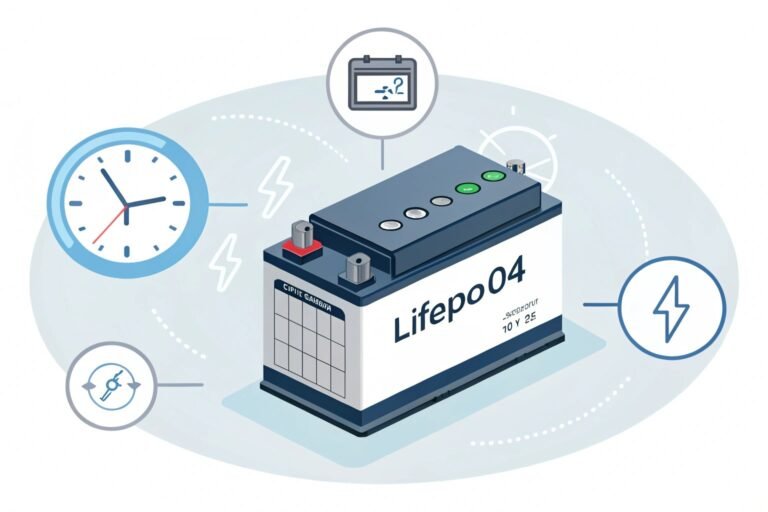
Introduction
One of the biggest reasons why LiFePO4 batteries are becoming increasingly popular in solar energy storage systems is their exceptionally long lifespan.
Many users considering a switch from lead-acid batteries ask:
- How long do LiFePO4 batteries really last?
- Are lithium batteries worth the higher price?
- What affects lithium battery lifespan?
- How can I maximize battery life?
Understanding battery lifespan is extremely important because it directly affects:
- system reliability
- replacement costs
- long-term investment value
This guide explains the real lifespan of LiFePO4 batteries and the key factors that influence their long-term performance.
What Is a LiFePO4 Battery?
LiFePO4 stands for Lithium Iron Phosphate.
It is one of the safest and most stable lithium battery chemistries available today.
LiFePO4 batteries are widely used for:
- solar energy storage
- telecom backup
- UPS systems
- residential ESS
- off-grid solar systems
- commercial battery storage
Their biggest advantage is their long cycle life compared with traditional lead-acid batteries.
What Does Battery Lifespan Mean?
Battery lifespan is usually measured in two ways:
1. Calendar Life
The total number of years the battery can operate.
2. Cycle Life
The number of charge and discharge cycles the battery can complete before capacity significantly decreases.
A cycle means:
- charging the battery
- then discharging it
Typical LiFePO4 Battery Lifespan
High-quality LiFePO4 batteries commonly achieve:
| Specification | Typical Value |
|---|---|
| Calendar Life | 10–15 years |
| Cycle Life | 4000–7000 cycles |
Some premium systems may exceed:
8000+8000+8000+
cycles under ideal conditions.
Comparison with Lead-Acid Batteries
| Battery Type | Typical Cycles |
|---|---|
| AGM Battery | 500–1200 |
| GEL Battery | 800–1500 |
| OPzV Battery | 2000–3000 |
| LiFePO4 Battery | 4000–7000 |
This is why lithium batteries usually provide much lower long-term operating costs.
How Long Is 6000 Cycles in Real Life?
Suppose a battery completes:
- 1 full cycle per day
Then:
6000÷365≈16.46000\div365\approx16.46000÷365≈16.4
years of operation are theoretically possible.
Actual lifespan depends on operating conditions and system design.