
Meta Description
Learn how to connect lithium batteries in series and parallel to increase voltage or capacity in energy storage systems.
Target Keywords
- lithium battery series connection
- lithium battery parallel connection
- battery bank configuration
Introduction
Energy storage systems often require larger battery capacity or higher voltage than a single battery can provide.
To achieve this, batteries can be connected in series or parallel configurations.
Understanding these connection methods is essential for building safe and efficient battery systems.
Series Connection
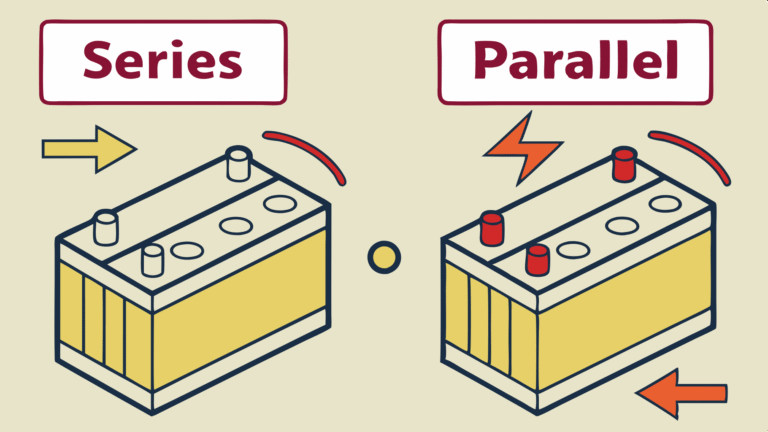
In a series connection, the positive terminal of one battery is connected to the negative terminal of the next battery.
Effect:
- Voltage increases
- Capacity remains the same
Example:
4 × 12V batteries in series → 48V system
Parallel Connection
In a parallel connection, all positive terminals are connected together and all negative terminals are connected together.
Effect:
- Capacity increases
- Voltage remains the same
Example:
4 × 100Ah batteries in parallel → 400Ah capacity
Series-Parallel Systems
Large energy storage systems often combine both methods.
Example:
- several batteries in series to increase voltage
- multiple series groups connected in parallel to increase capacity
Safety Considerations
When connecting lithium batteries:
- use identical battery models
- ensure same voltage and capacity
- avoid mixing old and new batteries
A BMS system is also necessary to protect the battery pack.
Conclusion
Series and parallel battery connections allow energy storage systems to achieve the required voltage and capacity.
Proper system design ensures safe operation and optimal performance.