
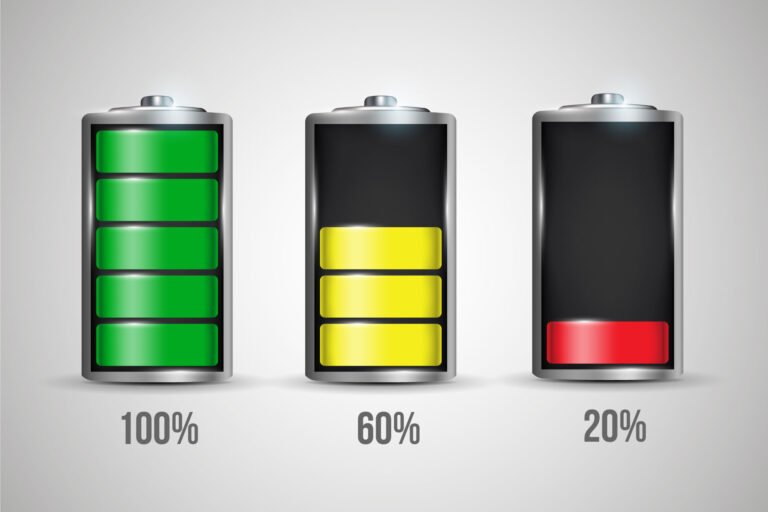
Introduction
Understanding the State of Charge (SOC) of a lithium battery is essential for:
- solar energy storage system design
- inverter setting configuration
- battery monitoring accuracy
- preventing over-discharge
- improving system lifespan
Many users still rely on voltage-based SOC estimation, but LiFePO4 batteries behave very differently from lead-acid batteries.
This guide explains how SOC works in LiFePO4 batteries and how to correctly interpret voltage vs capacity.
What Is SOC (State of Charge)?
SOC means:
The percentage of energy remaining in a battery.
Example:
- 100% = fully charged
- 50% = half charged
- 0% = fully discharged
Why SOC Is Different in LiFePO4 Batteries
Unlike lead-acid batteries, LiFePO4 batteries have a very flat voltage curve.
This means:
- voltage stays almost constant during discharge
- SOC cannot be accurately estimated by voltage alone
Voltage Stability of LiFePO4 Batteries
Typical behavior:
12.8V≈80% discharge range flat curve
Most discharge happens within a very narrow voltage range.
LiFePO4 SOC vs Voltage Chart (12V System)
| SOC | Voltage |
|---|---|
| 100% | 13.6–14.6V |
| 90% | 13.4V |
| 80% | 13.3V |
| 70% | 13.2V |
| 50% | 13.1V |
| 20% | 12.8V |
| 0% | 10–11V |
Why Voltage Is Not Reliable for SOC
Voltage-based SOC errors happen because:
- lithium voltage stays flat
- load affects voltage reading
- temperature changes voltage behavior
Therefore, modern systems rely on:
- BMS calculation
- coulomb counting
- smart monitoring systems
How BMS Calculates SOC
Modern LiFePO4 batteries use:
- current integration
- charge/discharge tracking
- internal calibration
This provides much more accurate SOC readings than voltage alone.
SOC in Solar Energy Storage Systems
In ESS systems, SOC is used to:
- control charging cutoff
- prevent over-discharge
- optimize solar usage
- protect battery lifespan
Recommended SOC Operating Range
For best lifespan:
10%−90%
Avoid:
- constant 0% discharge
- frequent 100% full charge
Why 80% DOD Is Common in ESS
Depth of discharge (DOD):
80% DOD
balances:
- usable energy
- battery lifespan
Common SOC Problems in Solar Systems
1. SOC Jumping
Caused by:
- inaccurate BMS calibration
- weak cell balance
2. SOC Not Reaching 100%
Caused by:
- incorrect charger settings
- communication mismatch
3. Sudden SOC Drop
Caused by:
- high load current
- voltage sag under load
SOC vs Real Capacity
SOC does NOT always equal usable energy.
Example:
- 50% SOC ≠ 50% usable runtime (depends on load)
Importance of SOC in Hybrid Inverters
Modern inverters use SOC for:
- battery priority control
- grid switching
- backup mode decisions
Compatible systems include:
- Deye
- Growatt
- Victron
- GoodWe
- Luxpower
Conclusion
SOC is a critical parameter in LiFePO4 battery systems, but it must be interpreted correctly.
Key takeaways:
- voltage is NOT reliable for SOC
- BMS-based SOC is more accurate
- lithium batteries have flat voltage curves
- ESS systems rely on smart monitoring
Correct SOC management improves:
- battery lifespan
- system efficiency
- solar energy utilization