
Introduction
Telecom base stations are the foundation of mobile communication networks.
As operators expand:
- 4G networks
- 5G infrastructure
- rural coverage
power reliability becomes increasingly important.
This guide explains why lithium batteries are becoming the standard backup solution for telecom base stations.
What Is a Telecom Base Station Battery?
A telecom battery system stores energy to maintain operation during:
- grid failures
- generator transitions
- renewable energy fluctuations
The battery bank powers:
- BTS equipment
- transmission systems
- network hardware
- monitoring systems
Why Backup Power Is Critical
Telecom sites often have availability requirements exceeding:
99.99%
Network downtime directly affects:
- subscribers
- revenue
- emergency services
Traditional Battery Challenges
Lead-acid systems often face:
- heavy weight
- maintenance requirements
- shorter lifespan
- limited cycle capability
Advantages of Lithium Batteries
Long Service Life
Typical service life:
- 10–15 years
Lower Total Cost of Ownership
Savings come from:
- fewer replacements
- reduced maintenance
- lower transportation costs
Faster Recharge
This improves performance when operating with generators or solar systems.
Better Energy Efficiency
Efficiency:
95%−98%
compared with lower efficiency lead-acid systems.
Typical Telecom Backup Configurations
Small Site
Load:
500W–1000W
Battery:
- 48V 100Ah
Medium Site
Load:
1000W–2000W
Battery:
- 48V 200Ah
Large Site
Load:
2000W+
Battery:
- multiple parallel battery modules
Backup Duration Calculation
Example:
Load:
1500W
Battery:
10.24kWh
Runtime:
10240÷1500≈6.8 hours
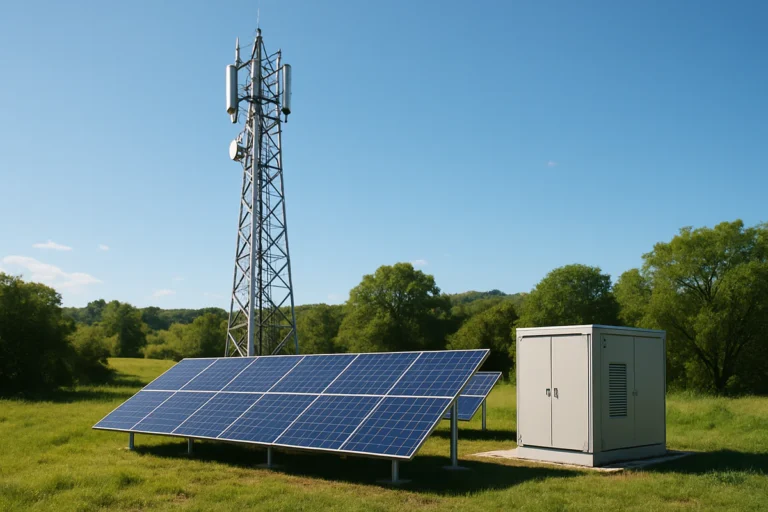
Solar-Powered Telecom Sites
Many operators are deploying:
- solar arrays
- lithium storage
- hybrid controllers
Benefits:
- fuel savings
- reduced emissions
- lower operating costs
Key Features to Look For
Intelligent BMS
Should include:
- temperature monitoring
- overcurrent protection
- remote diagnostics
Communication Protocols
Support for:
- CAN
- RS485
is highly recommended.
High Temperature Operation
Particularly important for:
- Africa
- Middle East
- South America
Why Telecom Operators Prefer Modular Batteries
Modular systems offer:
- easy expansion
- simplified transportation
- easier maintenance
Frequently Asked Questions
How long should telecom backup last?
Requirements vary from 2 to 12 hours depending on site classification.
Is lithium suitable for remote telecom towers?
Yes, especially when combined with solar systems.
Can lithium batteries reduce OPEX?
Yes, significantly.
Conclusion
LiFePO4 batteries have become the preferred backup power solution for telecom base stations because they offer:
- long lifespan
- low maintenance
- high efficiency
- remote monitoring capability
As telecom networks continue expanding, lithium battery technology will play a critical role in improving reliability and reducing operating costs.