
Introduction
Proper battery wiring is one of the most important aspects of any solar energy storage system.
Incorrect wiring can cause:
- inverter failures
- battery imbalance
- overheating
- reduced battery lifespan
- safety risks
Whether you are installing:
- a residential ESS
- an off-grid solar system
- a telecom backup solution
- a commercial battery bank
understanding the correct battery wiring method is essential.
This guide explains the most common LiFePO4 battery wiring configurations used in modern solar energy storage systems.
Why Proper Battery Wiring Matters
The battery bank is the heart of every energy storage system.
Poor wiring can result in:
- unequal charging
- unequal discharging
- excessive current
- communication problems
- premature battery failure
Proper wiring ensures:
- maximum battery lifespan
- optimal inverter performance
- balanced current distribution
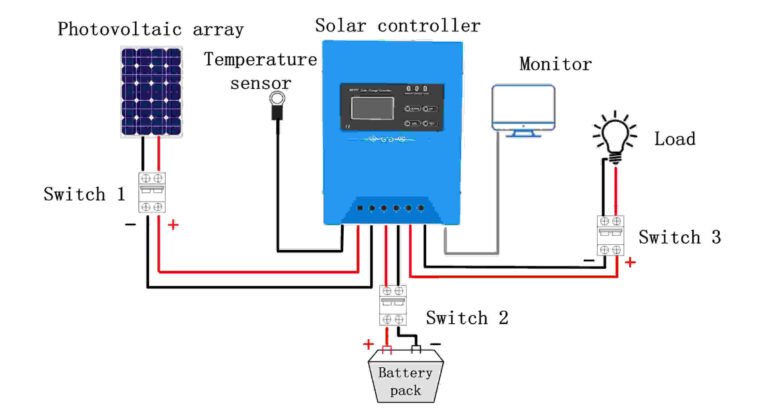
Basic Components of a Solar Battery System
A typical ESS installation includes:
- Solar Panels
- MPPT Charge Controller
- Hybrid Inverter
- LiFePO4 Battery
- DC Breakers
- Battery Cables
- Monitoring System
Typical Residential ESS Architecture
System flow:
Solar Panels ➡️ Hybrid Inverter ➡️ LiFePO4 Battery Bank ➡️ Household Loads ➡️ Utility Grid
Single Battery Wiring Example
One battery:
- 51.2V 100Ah
- 5.12kWh
Connection:
Battery Positive → Inverter Positive
Battery Negative → Inverter Negative
Battery Energy Calculation
Formula:
Energy=Voltage×Capacity
Example:
51.2×100=5120Wh
Available energy:
- 5.12kWh
Parallel Wiring Configuration
Most modern ESS systems expand capacity using parallel connections.
Example: Two Batteries
Battery 1:
- 51.2V 100Ah
Battery 2:
- 51.2V 100Ah
Result:
Voltage:
- 51.2V
Capacity:
100+100=200Ah
Total Energy:
51.2×200=10240Wh
Equivalent:
- 10.24kWh
Why Parallel Wiring Is Popular
Advantages include:
- easier expansion
- lower installation complexity
- inverter compatibility
- improved flexibility
This is the preferred approach for most modern LiFePO4 ESS systems.
Equal-Length Cable Rule
When connecting batteries in parallel:
All positive cables should be:
- same length
- same gauge
All negative cables should be:
- same length
- same gauge
This ensures balanced current distribution.
Why Unequal Cables Are Dangerous
Different cable resistance causes:
- unequal charging
- unequal discharging
- overheating
- reduced battery life
Recommended Cable Sizing
Cable selection depends on:
- voltage
- current
- distance
Example
For a 5kW inverter:
Current:
5000÷51.2≈98A
Battery cables should be sized accordingly.
Battery Breakers and Fuses
Every ESS system should include:
- DC breaker
- battery fuse
- emergency disconnect
These devices improve safety during:
- maintenance
- short circuits
- fault conditions
Communication Wiring
Modern lithium batteries often include:
- CAN
- RS485
connections.
These allow communication between:
- battery
- inverter
- monitoring system
Why Communication Is Important
Benefits include:
- accurate SOC display
- optimized charging
- fault reporting
- improved battery lifespan
Compatible Inverter Brands
Most modern ESS batteries support:
- Deye
- Growatt
- Victron
- Solis
- GoodWe
- Luxpower
- SMA
Common Wiring Mistakes
Reversed Polarity
Connecting positive to negative can damage equipment immediately.
Different Battery Models
Never parallel batteries with:
- different voltages
- different capacities
- different BMS versions
Unequal Cable Lengths
Causes imbalance and current distribution issues.
Ignoring Grounding
Proper grounding improves:
- safety
- lightning protection
- system reliability
Wiring for Larger ESS Systems
Commercial ESS systems often use:
- battery cabinets
- busbars
- DC combiner boxes
These simplify large-scale installations.
Frequently Asked Questions
Can I connect lithium batteries directly in parallel?
Yes, if manufacturer guidelines are followed.
Should battery cables be the same length?
Yes, always.
Do I need a breaker between battery and inverter?
Strongly recommended.
Can I mix battery brands?
Not recommended.
Conclusion
Proper battery wiring is essential for safe and reliable ESS operation.
Key principles include:
- correct polarity
- equal cable lengths
- proper protection devices
- communication integration
Following these guidelines helps maximize:
- battery lifespan
- system efficiency
- installation safety
and ensures long-term performance of your solar energy storage system.