
Meta Description:
Learn best practices for transporting and storing LiFePO₄ energy storage batteries in rainy or high-humidity environments to avoid moisture damage and performance risks.
Keywords: LiFePO₄ battery transportation humid climate, lithium battery storage rainy weather, ESS battery moisture protection logistics, lithium battery warehouse humidity control
1. Introduction
Transportation and warehousing conditions in rainy regions play a critical role in maintaining LiFePO₄ battery quality before installation. Moisture exposure during logistics can cause hidden reliability issues that only appear after deployment.
2. Risks During Rainy Weather Logistics
Transport and storage in humid climates can lead to:
- Packaging moisture penetration
- Connector oxidation before installation
- Condensation inside sealed battery modules
- Reduced insulation performance
These risks emphasize the importance of climate-controlled logistics management.
3. Packaging Requirements for Rainy Conditions
3.1 Moisture-Proof Packaging
Use:
- Vacuum-sealed aluminum moisture barrier bags
- Desiccant packs inside packaging
- Waterproof outer cartons or crates
This layered packaging system minimizes moisture ingress during sea or land transport.
3.2 Shock and Water Protection
Rain often coincides with rough logistics handling. Combined waterproof and shockproof packaging ensures both mechanical and environmental protection.
4. Warehouse Storage Guidelines
4.1 Humidity Control Standards
Ideal storage conditions:
- Relative humidity: 30%–60%
- Temperature: 15–30°C
- No direct exposure to rain or condensation-prone areas
4.2 Elevated Storage Method
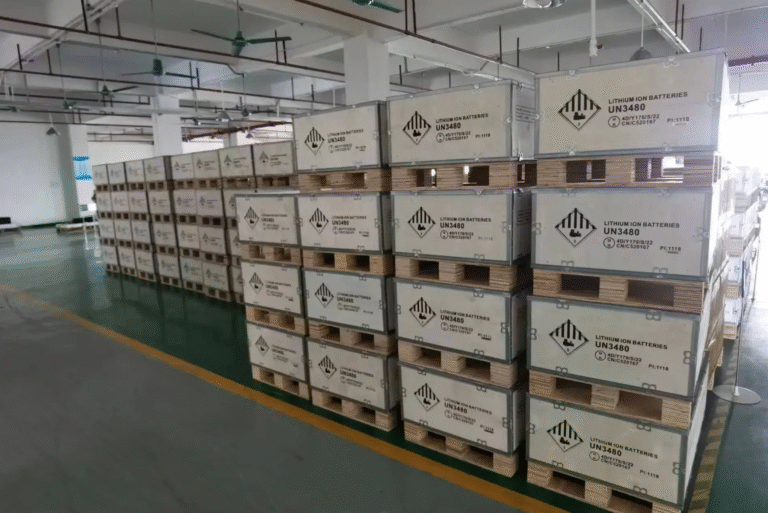
Batteries should be stored on pallets at least 10–15 cm above ground level to prevent moisture absorption from floors during wet seasons.
5. Pre-Installation Inspection After Storage
Before deploying stored batteries in ESS projects:
- Inspect packaging for moisture traces
- Check terminal oxidation condition
- Measure insulation resistance
- Confirm BMS communication and voltage stability
6. Conclusion
Proper transportation and storage management in rainy and humid climates is essential to preserve LiFePO₄ battery quality. Moisture-proof packaging, controlled warehouse humidity, and thorough pre-installation inspections ensure reliable ESS performance from day one.