
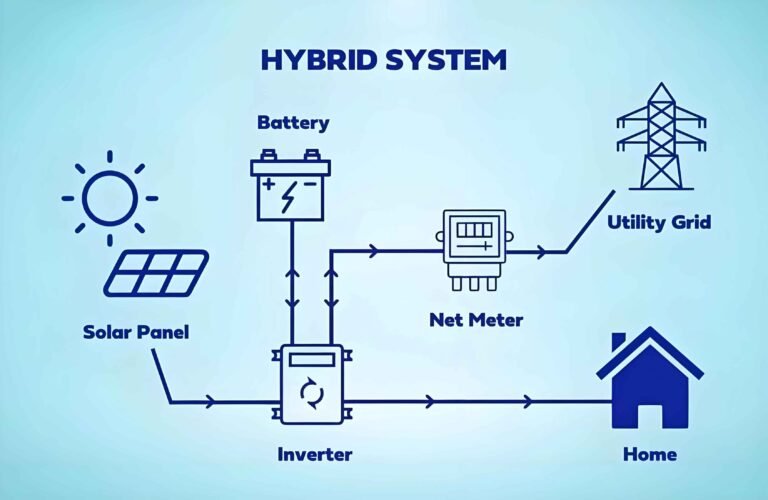
1. What Is a Hybrid Solar System?
A hybrid solar system combines:
- solar panels
- battery storage
- utility grid connection
Unlike off-grid systems, hybrid systems can:
- use solar power during the day
- store excess energy in batteries
- use grid power when necessary
This makes hybrid systems one of the most flexible and efficient energy solutions available today.
2. Why Batteries Are the Core of Hybrid Systems
Without batteries, excess solar energy is often wasted or exported to the grid at low value.
A battery allows users to:
- maximize solar self-consumption
- reduce electricity bills
- maintain backup power during outages
- improve energy independence
👉 The battery is the energy center of the hybrid system.
3. Why LiFePO4 Batteries Are Ideal for Hybrid Systems
Hybrid systems usually cycle daily.
This requires batteries with:
- high cycle life
- deep discharge capability
- stable efficiency
- long lifespan
LiFePO4 batteries are ideal because they provide:
- 4000–8000 cycles
- 80–90% DoD
- high energy efficiency
- low maintenance
4. How to Size Batteries for Hybrid Systems
Sizing depends on:
- daily electricity consumption
- solar generation
- desired backup time
- peak energy usage
Example
Daily household consumption:
- 15 kWh
Desired nighttime backup:
- 10 kWh
Battery recommendation:
- 10–15 kWh lithium storage system
5. Important Battery Selection Factors
5.1 Voltage Compatibility
Most modern hybrid systems use:
- 48V
- 51.2V lithium batteries
Always verify compatibility with:
- inverter
- solar charge controller
5.2 Communication Compatibility
Smart communication improves:
- charging efficiency
- battery protection
- system monitoring
Common protocols:
- CAN
- RS485
5.3 Scalability
Energy demand may increase over time.
Choose systems that support:
- parallel expansion
- modular battery architecture
6. Wall-Mounted vs Rack-Mounted Batteries
Wall-Mounted Batteries
Best for:
- residential systems
Advantages:
- compact appearance
- space saving
- easy installation
Rack-Mounted Batteries
Best for:
- larger hybrid systems
- commercial applications
Advantages:
- flexible expansion
- easier maintenance
- higher capacity
7. Common Hybrid System Mistakes
Mistake 1: Battery Too Small
This causes:
- insufficient nighttime backup
- frequent deep cycling
- shorter lifespan
Mistake 2: Poor Inverter Compatibility
Communication mismatch can lead to:
- charging errors
- unstable operation
Mistake 3: Ignoring Future Expansion
Many users later add:
- EV chargers
- air conditioning
- additional appliances
Battery systems should support future growth.
8. Recommended Hybrid Solar Battery Configuration
For most residential hybrid projects:
👉 Recommended:
- 51.2V LiFePO4 battery
- Smart hybrid inverter
- Modular expansion support
- Remote monitoring APP
9. Why Hybrid Systems Are Becoming More Popular
Global electricity prices continue rising.
Hybrid systems help users:
- reduce dependence on the grid
- lower monthly bills
- increase energy security
In some countries, unstable power supply makes battery backup even more valuable.
10. Final Recommendation
If you want:
- lower electricity costs
- better solar utilization
- reliable backup power
- long-term savings
👉 A hybrid solar system with LiFePO4 battery is one of the best long-term energy investments.
📩 FREE Hybrid Solar System Design
We provide:
- Battery sizing
- Hybrid inverter matching
- Residential & commercial solutions
- OEM / ODM customization
- Technical consultation
👉 Send us:
- Daily electricity usage
- Solar panel size
- Backup requirements
💡 We will provide a customized hybrid battery solution within 24 hours.