
Using Tips
LiFePO4 Battery Shows 70%, Then Jumps to 100% While Charging—Is the BMS Wrong?
Why SOC Can Drift Before the Battery Reaches Full Charge The BMS estimates SOC primarily by tracking current entering and leaving the battery. Suppose a

Why SOC Can Drift Before the Battery Reaches Full Charge The BMS estimates SOC primarily by tracking current entering and leaving the battery. Suppose a
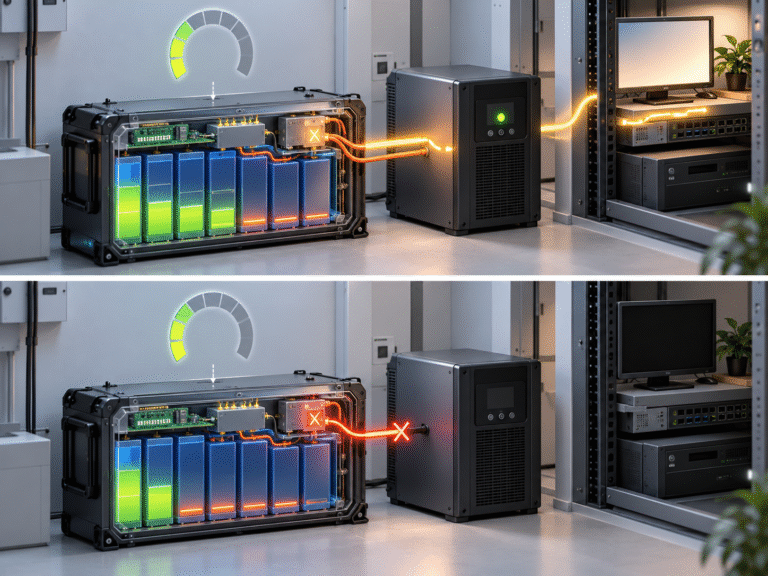
Introduction A UPS is operating normally from a LiFePO4 battery. The battery management system shows 45% SOC, then 40%, then perhaps 37%. The customer expects
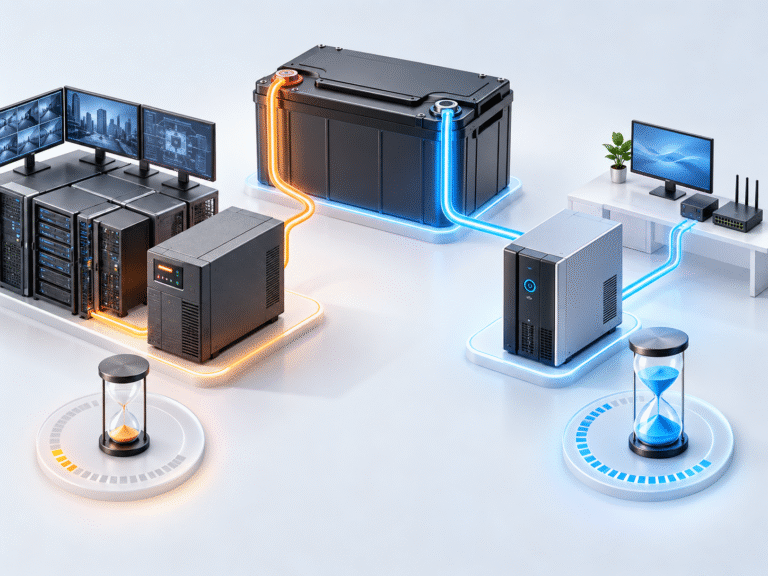
Begin with Actual Load, Not UPS Nameplate Rating Suppose both UPS systems are rated at: 5kVA This does not mean they are supplying the same
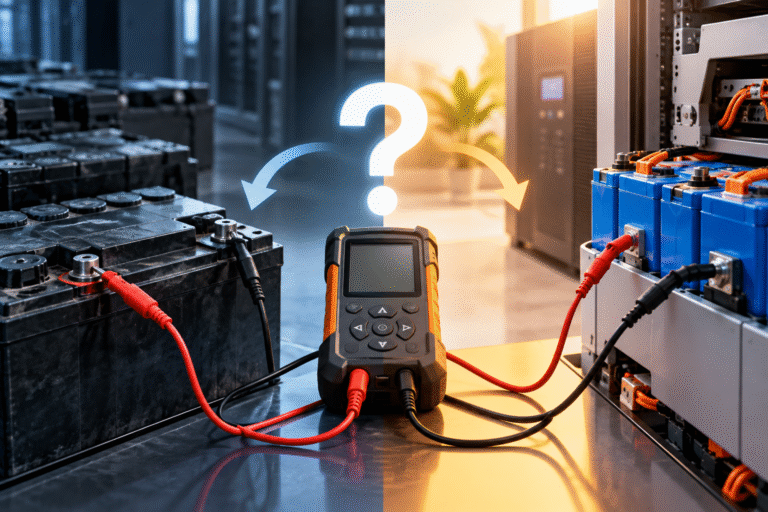
Introduction UPS service companies have used battery impedance, conductance and internal-resistance testers for many years. A technician can walk through a large VRLA battery room,
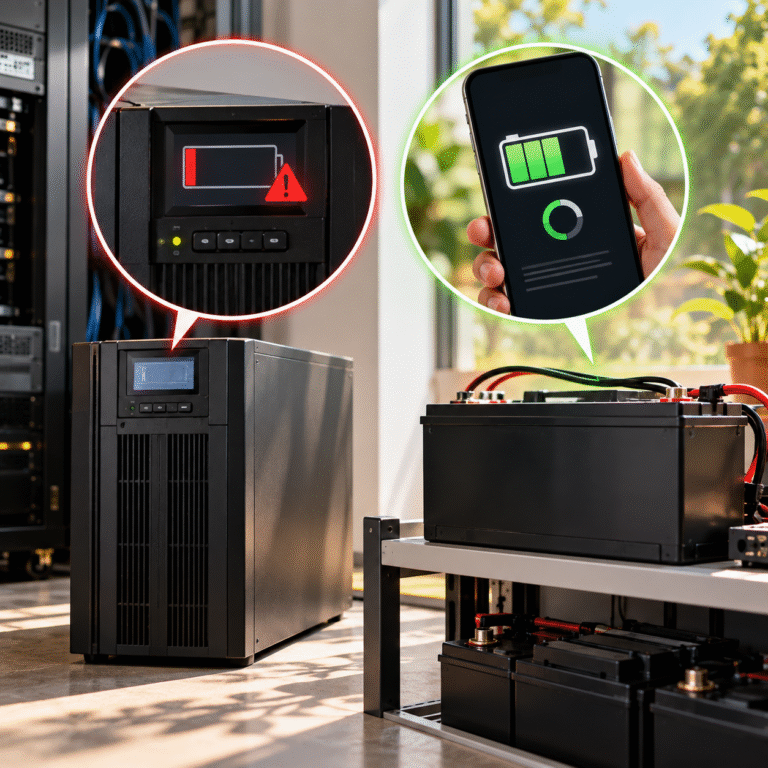
The UPS and BMS May Be Looking at Two Different Things A LiFePO4 BMS can estimate SOC using coulomb counting. It measures current entering and

Runtime Is Calculated, Not Measured A UPS can measure electrical quantities such as: But it cannot directly measure “47 minutes remaining.” Runtime is calculated using

Introduction A customer complains that a LiFePO4 battery does not provide enough UPS backup time. The distributor tests the battery at the warehouse and finds

How Does a UPS Decide That a Battery Is “Weak”? A UPS cannot directly look inside the battery and determine its exact remaining capacity. Instead,

Introduction An importer receives a quotation for LiFePO4 batteries with a three-year, five-year or even longer warranty. The number looks reassuring, so the buyer assumes

Introduction Launching a private-label LiFePO4 battery brand looks simple from the outside. Choose a Chinese manufacturer, send a logo, approve a carton and place a