
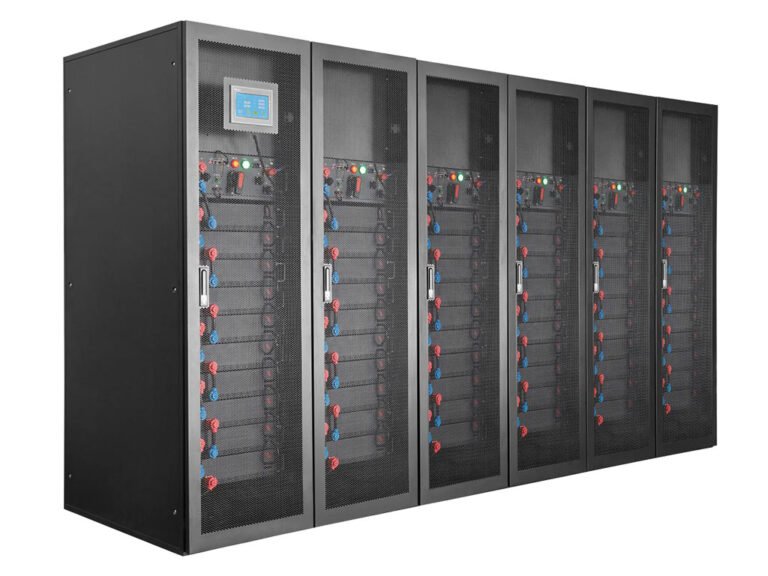
1. Why UPS Battery Selection Matters
A UPS system is only as reliable as its battery.
When grid power fails, the battery must:
- respond instantly
- deliver stable voltage
- support critical loads without interruption
In industries such as:
- data centers
- hospitals
- telecom
- banking
- security systems
battery reliability is mission-critical.
2. Main Requirements for UPS Batteries
UPS systems require:
- instant discharge capability
- stable voltage output
- long standby life
- high reliability
Unlike solar systems, UPS batteries are often:
- in standby mode most of the time
- discharged only during outages
3. Lead-Acid vs Lithium for UPS Systems
| Feature | Lead-Acid | LiFePO4 |
|---|---|---|
| Initial Cost | Lower | Higher |
| Lifespan | 3–5 years | 8–15 years |
| Weight | Heavy | Light |
| Charging Speed | Slow | Fast |
| Maintenance | Required | Minimal |
4. Why Lithium Batteries Are Becoming Popular in UPS Systems
4.1 Longer Lifespan
Replacing UPS batteries in large facilities is expensive.
Lithium reduces:
- replacement frequency
- maintenance cost
- downtime risk
4.2 Faster Charging
After a power outage:
- lithium batteries recharge much faster
This improves system readiness for future outages.
4.3 Space Saving
Lithium batteries:
- have higher energy density
- require less installation space
Very important for:
- server rooms
- telecom cabinets
- compact installations
5. How to Calculate UPS Battery Capacity
Example:
UPS load:
- 10 kW
Required backup:
- 1 hour
Calculation:
Considering efficiency and safety margin:
👉 Recommended battery: 12–15 kWh
6. Key Buying Factors
6.1 Discharge Rate
UPS systems require:
- high-power instant output
Battery must support high discharge current.
6.2 Compatibility
Always verify:
- inverter compatibility
- communication protocol
- charging voltage
6.3 Safety
UPS batteries are often installed indoors.
Important:
- thermal stability
- reliable BMS
- fire safety
7. Common UPS Battery Mistakes
- undersized battery bank
- incompatible communication protocol
- poor ventilation design
- buying low-quality cells
8. Recommended UPS Battery Configuration
For modern UPS projects:
👉 Recommended:
- 51.2V LiFePO4 rack battery
- Smart BMS
- Modular expansion design
9. Final Recommendation
If your UPS project values:
- reliability
- long-term ROI
- lower maintenance
- fast charging
👉 LiFePO4 batteries are the best long-term investment.
📩 FREE UPS Battery Consultation
We provide:
- UPS battery sizing
- Lithium replacement solutions
- Rack battery systems
- OEM/ODM customization
👉 Send us your UPS model and load details for a free proposal.