
Introduction
Microgrids are becoming increasingly important as communities seek:
- energy independence
- renewable integration
- improved resilience
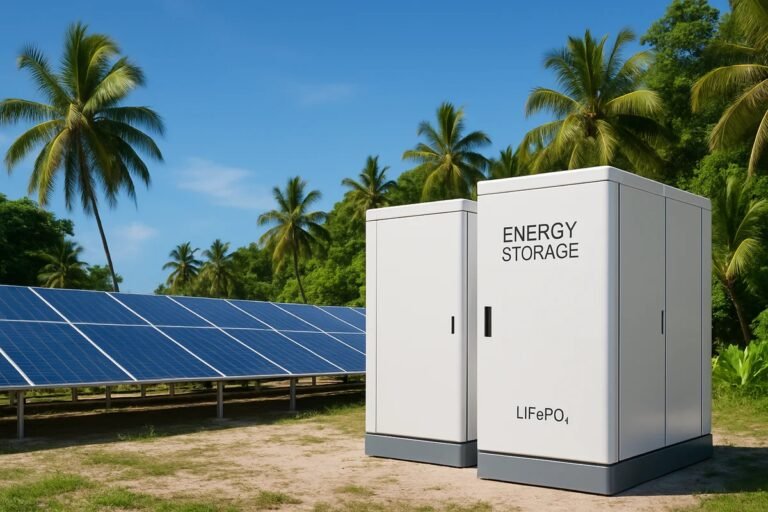
At the heart of every successful microgrid is a reliable energy storage system.
Today, LiFePO4 batteries are the preferred choice for most modern microgrid projects.
What Is a Microgrid?
A microgrid is a localized power system that can operate:
- connected to the utility grid
- independently (island mode)
Components typically include:
- solar panels
- battery storage
- generators
- control systems
Why Microgrids Need Batteries
Batteries provide:
- energy balancing
- backup power
- frequency support
- renewable integration
Key Requirements for Microgrid Batteries
Ideal batteries should offer:
- long lifespan
- deep cycling capability
- safety
- scalability
Why LiFePO4 Is Preferred
Long Cycle Life
Typical lifespan:
High Efficiency
Efficiency:
Safety
Excellent thermal stability.
Modular Expansion
Storage can grow with project requirements.
Typical Microgrid Applications
- remote villages
- islands
- military facilities
- industrial parks
- universities
Battery Sizing Considerations
Factors include:
- daily energy consumption
- backup requirements
- renewable generation profile
Example
Daily demand:
100kWh
One day autonomy:
Required storage:
Future of Microgrids
Industry trends include:
- AI control systems
- virtual power plants
- distributed energy resources
Battery storage will remain a core component.
Conclusion
LiFePO4 batteries provide the ideal combination of:
- safety
- lifespan
- efficiency
- scalability
making them the preferred energy storage solution for modern microgrid projects.